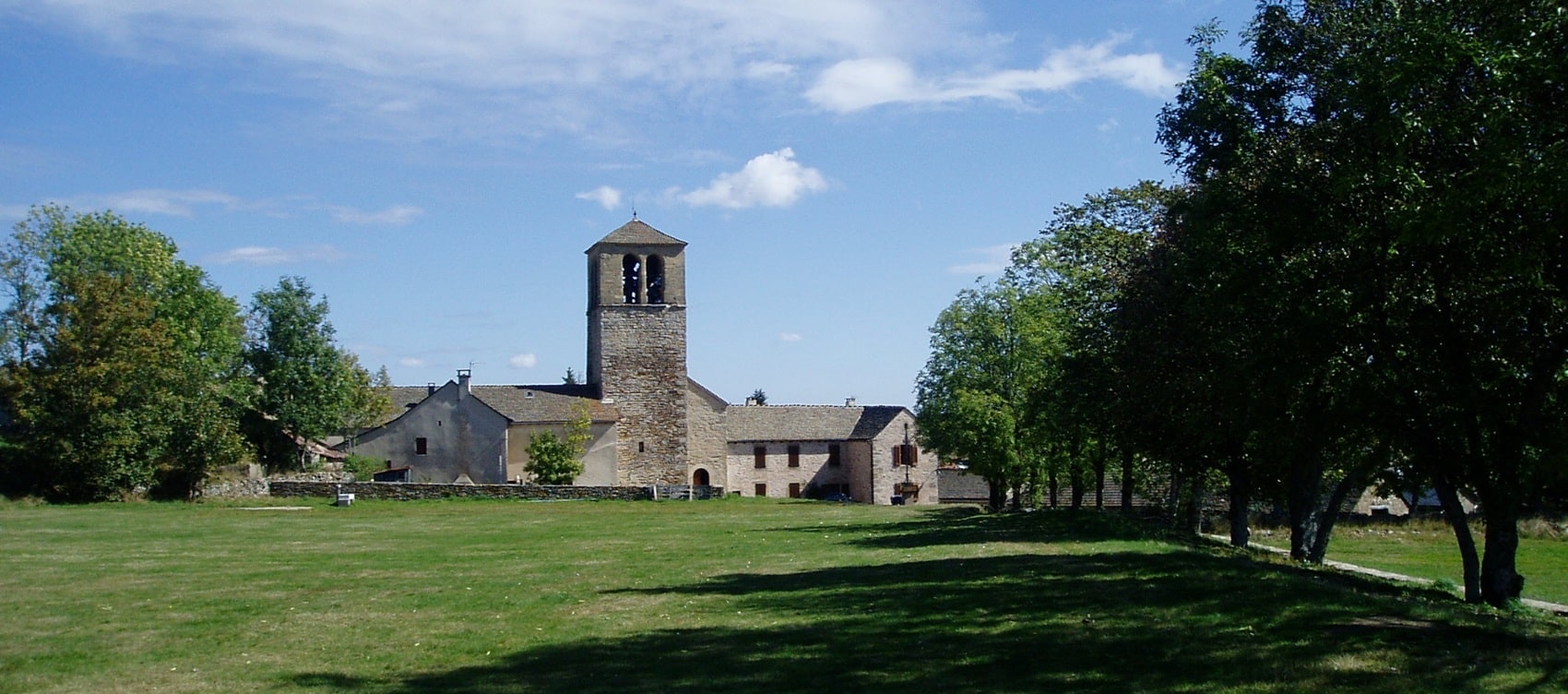
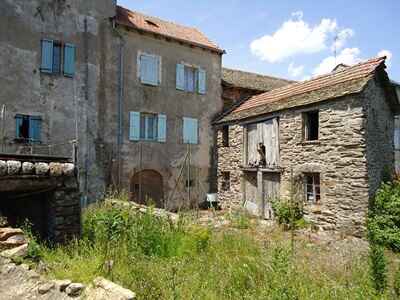
 An Evening at the Chasseradès Inn and Departure at Dawn
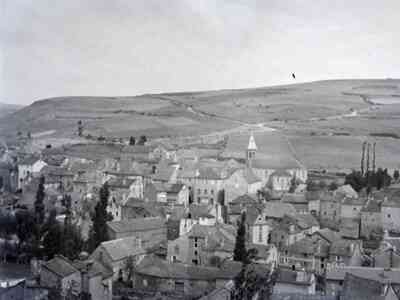
“From there, a hill being crossed, our road led us across a naked table-land until we reached Chasseradès at sundown.
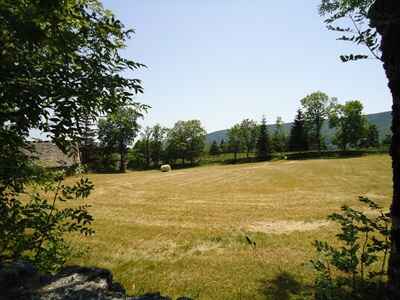 The company in the inn kitchen that night were all men employed in survey for one of the projected railways. They were intelligent and conversable, and we decided the future of France over hot wine, until the state of the clock frightened us to bed. There were four beds in the little upstairs room; and we were six to go to bed. Yet I had a bed to myself, and persuaded them to leave the window open.
‘Hé, bourgeois, il est cinq heures!’ was the cry that awoke me in the morning (Saturday, September 28th). The room was full of a transparentness of vapour, which allowed me to see the other three beds and the five different nightcaps on the bolster. But out of the window the dawn wasaly-red along the mountain-tops, and the day was going to flood the plateau. The hour was inspiring, and there was a promise of calm weather, which was loyally kept.
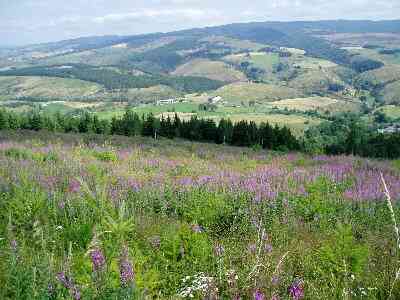
I was soon under way with Modestine. The road ran for a while upon the table-land, and then descended through a steep village into the valley of the Chassezac. Its stream ran among green meadows, hidden from the world by its steep banks; the broom was in flower, and here and there a hamlet sent up its smoke.
At last the path crossed the Chassezac upon a bridge, and, forsaking this deep hollow, set itself to cross the mountain of the Goulet. It wound up through Lestampes (L'Estampe today) by meadows and beech-woods and birch-woods, and at every turn gave me a fresh and pleasant view.
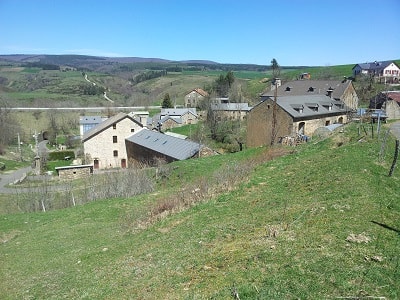 The Chassezac Valley and the Pastoral Music of L'Estampe
Even in the ravine of the Chassezac my ear had been haunted by a sound like a great bass bell ringing at the distance of many miles; and as I continued to mount and draw nearer, it seemed to change its tune. At last I found that it was caused by a shepherd driving his flock to pasture to the sound of a horn.
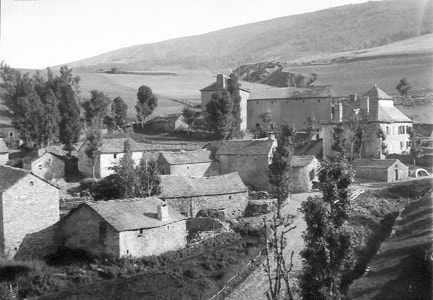 The narrow street of Lestampes stood full of sheep from wall to wall—black sheep and white, bleating with one accord like the birds in spring, and each one accompanying himself upon the sheep-bell round his neck. It made apathetic and ringing concert in the sharp air.
A little higher I passed two men perched in a tree, wielding a bill-hook to lop the branches; one of them was humming the tune of a bourrée. A little further yet, as I was already entering beneath the birches, the crowing of cocks came cheerfully to my ears, and at the same time the voice of a flute prolonged a discreet and plaintive air from one of the upland villages.
I pictured to myself a rustic schoolmaster, with apple cheeks and grizzled hair, playing upon a pipe in his bit of garden in the clear autumn sunshine. These various strains of singular charm filled my heart with an unusual expectation.
It seemed to me that once past the ridge I was climbing, I should descend into the earthly paradise; and I was not disappointed, now that I was broken in to the rain, the hurricane, and the desolation of the region. Here ended the first part of my journey; and this was like a harmonious prelude to the second, which was fairer still.
 The Ascent of the Goulet Mountain and Arrival at Le Bleymard
There are degrees in luck, as there are in penalties short of capital punishment; and the kindly spirits then led me into an adventure which I relate for the benefit of future donkey-drivers. The road made such wide zigzags along the flank of the mountain that I struck out a short cut by map and compass, and plunged through stunted woods to rejoin the way a little higher up.
This was the occasion of a serious conflict with Modestine. She would have none of my short cut; she turned right round, walked backwards, kicked, and—she whom I had fancied mute—began to bray aloud in a hoarse voice, like a cock heralding the birth of dawn.
 I plied the goad with one hand, and with the other, so steep was the ascent, I had to hold on the pack-saddle. Half a dozen times my beast was within an ace of tumbling headlong upon me; half a dozen times, out of pure weakness of spirit, I was on the point of giving up my design and leading Modestine back to the foot of the slope to follow the highway.
But I looked upon the matter as a point of honour and persisted in spite of all. I was surprised, on reaching the roadway once more, by the sensation of raindrops falling upon my hands, and several times I looked up in wonder at the cloudless sky. It was simply the sweat running from my brow.
At the summit of the Goulet there was no longer any made road—only guide-stones set up from place to place to direct the drovers. The mossy turf was elastic and fragrant underfoot. I had only a few larks for company, and met no more than a single ox-wain between Lestampes and Bleymard.
In front of me opened a shallow valley, and behind lay the range of the Lozère mountains, partly wooded, with rather broken slopes, yet on the whole of a dry and dreary aspect. There was scarce a sign of cultivation. Yet near Bleymard the high-road from Villefort to Mende passed through a succession of meadows planted with slender poplars, and all resonant on every side with the bells of sheep and herds.” Travels with a Donkey in the Cévennes by Robert Louis Stevenson.