

From the Allier Valley to the Le Thort dolmen via Chasseradès
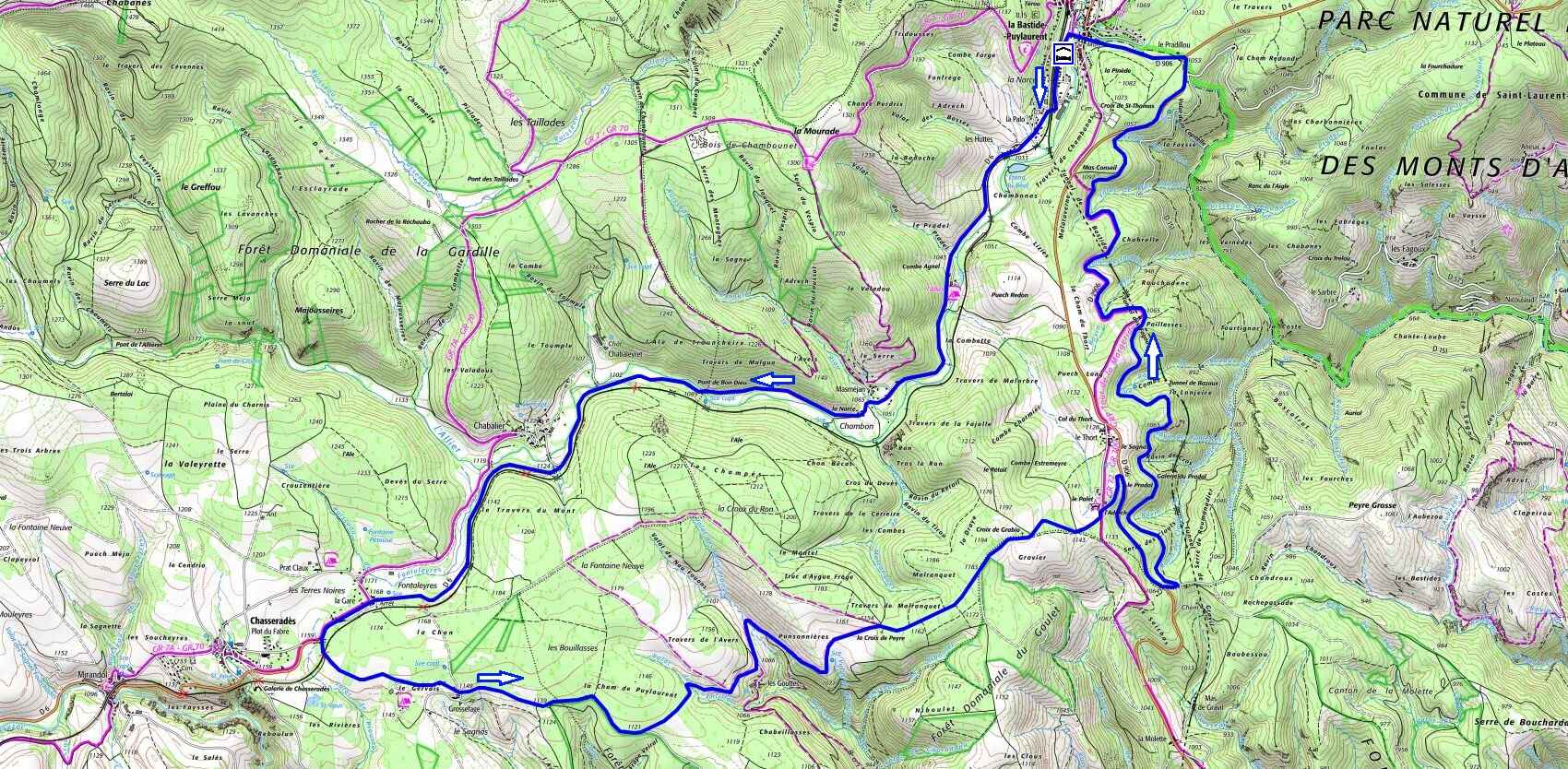
 Distance: 25 km. Maximum altitude: 1,176 m. Minimum altitude: 1,016 m. Total elevation gain: 360 m.
IGN Maps: La Bastide-Puylaurent (2738E). Largentière, La Bastide-Puylaurent, Vivarais Cévenol (2838OT).
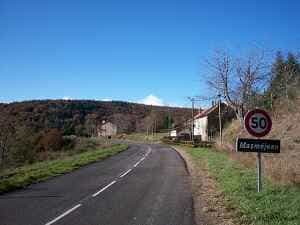
Take the D6 road along the Allier River, passing through Les Huttes, Masméjean, Château de Chabaleyret, Chabalier, and the Chasseradès train station. After 500 meters, turn left, cross the railway tracks, and continue along this small road through Grossefage for 2.7 km. Next, take the road on the left passing through the hamlet of Les Gouttes, the Peyre and Grabio crosses, and the Palet de Gargantua dolmen. Turn right onto the D906 and follow it toward Villefort for 950 meters, then take two consecutive left turns onto the old abandoned road, which will lead you back to La Bastide-Puylaurent via the Pradillou roundabout.
Print the route - Electric bike rental
Chasseradès is a historic commune that has retained its rural charm and architectural heritage. Its stone houses, often topped with traditional lauze (slate) roofs, are typical of Lozère architecture. The village boasts a 12th-century church dedicated to Saint-Blaise. This Romanesque building is a fine example of the region's religious architecture; it has been restored over the centuries while preserving its authentic medieval character. The village is also famous for its railway viaduct, originally built for the Compagnie du Midi train line linking Clermont-Ferrand to Nîmes. With its imposing arches, the Chasseradès viaduct stands as an impressive testament to 19th-century engineering.
The legend of the Palet de Gargantua belongs to a rich tradition of folktales surrounding Gargantua, the mythical giant created by the Renaissance writer François Rabelais. Gargantua is typically depicted as a giant of titanic proportions, possessing extraordinary strength and an insatiable appetite. In French popular culture, his passage through a region is often said to have shaped unique landscapes: unusually placed rocks, dolmens, and massive stones are playfully thought to be the "remnants" of his exploits. As for the Palet de Gargantua in Le Thort, legend has it that the giant, while wandering through the mountains of Lozère, hurled a massive boulder that landed squarely on the plateau where it still rests today. This playful toss is said to be the origin of the imposing stone, which closely resembles a giant playing piece (a palet).