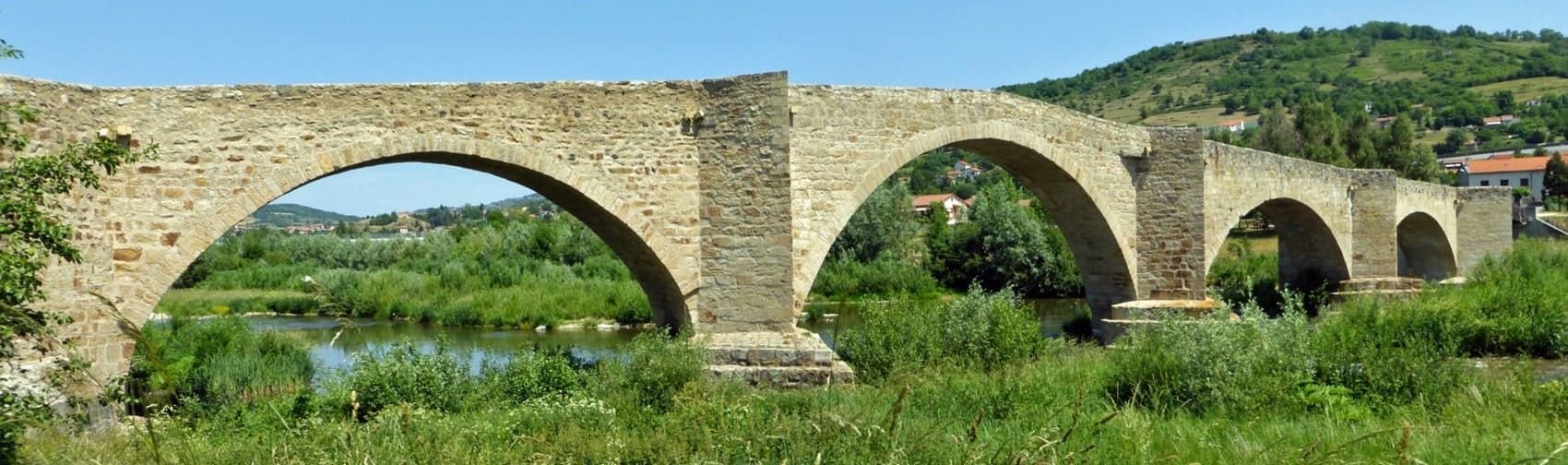
Le Puy-en-Velay boasts a rich and ancient history. Its earliest traces date back to antiquity, although its true rise to prominence is deeply tied to the Middle Ages. The city was originally a pagan place of worship before evolving into a major Christian spiritual center. From the 10th century onward, it established itself as a fundamental starting point for the pilgrimage to Santiago de Compostela, a route known as the Via Podiensis. During this time, the town enjoyed the protection of its bishops and the cathedral chapter. The Cathedral of Notre-Dame-du-Puy continues to stand as a testament to this religious fervor and the city's past power.
 Origins and Foundation of the Bishopric
At the end of the 6th century, during the time of Gregory of Tours—the first historian to mention it—the city of Le Puy, or rather Anis (Anicium), did not yet exist. This designation originally referred to a mountain that overlooked the site of Anis, now known as Le Puy. The word itself is derived from the Aquitanian puich or puech, meaning height or eminence.
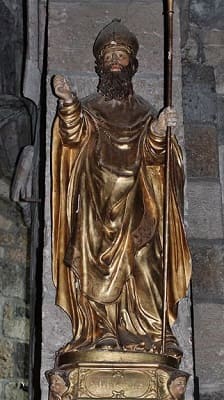
From its very origins, the city of Le Puy or Anis, located in the Velay region, fell under the authority of its bishops, among whom we count eleven saints. The exact date of the foundation of this episcopal seat remains quite uncertain, and we barely know the names of the bishops of Velay who held the position prior to the 6th century.
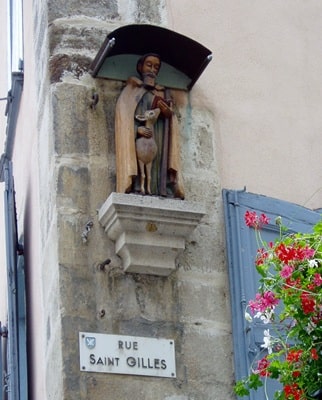
The two historians of this church, Gissey and Theodore, do recount several details of their lives; however, they rely entirely on breviaries or legends of too recent an origin, making their accounts highly questionable. They identify Saint George as the church's first bishop, claiming he was a disciple of Saint Peter. Today, the collegiate church bearing his name in Le Puy still preserves his relics.
After him, Saint Marcellin and Saint Paulier are mentioned. It is said that the latter's successor, Saint Evode, commonly called Voisy, transferred the episcopal seat from its original location at Ruessium or Vallava (civitas Vellavorum) to the city of Anicium. Whether this occurred in the 3rd or the 6th century remains a subject of considerable debate.
According to another version of events, this transfer did not take place until between the years 877 and 919, through the efforts of Bishop Norbert, who simultaneously moved the relics of Saint George and Saint Marcellin from Vallava to Le Puy.
 The Rise of Pilgrimage and Episcopal Power
Regardless of the exact timeline, the beginnings of Le Puy must have been challenging, as it appears the town did not truly establish itself until the period spanning the late 10th century to the early 12th century. Anicium was still just a village—its lands belonging to the Dukes of Aquitaine, the Counts of Velay—when King Raoul, on April 8, 924, with the consent of his vassal William II (or III), granted the village adjoining the church of Notre-Dame-du-Puy to the Bishop of Velay, Adalard. This grant included all dependencies: the rights of tolls and customs (teloneum), market rights, jurisdiction, and the right to mint coins.
From then on, the Bishop of Le Puy enjoyed royal privileges. While it cannot be definitively proven that Adalard was the first to mint coins, it is an undeniable fact that his successors struck coins known as podienses. King Raoul's charter was confirmed in 955 by King Lothair in favor of Bishop Godescalc, who had journeyed to Laon to meet him. In 1134, it was further confirmed by Louis the Fat, whose diploma, issued in Orléans, formally equated Anis (Anicium) with Le Puy for the first time and officially designated it a city.
In this charter, Louis the Fat also granted the castle of Corneille to Bishop Humbert. However, like Lothair and Raoul before him, he made no mention of the County of Velay, proving that the Bishops of Le Puy did not immediately annex it to their domain. If certain historians are to be believed, the bishops were subject only to the Holy See as early as 998, thanks to a privilege granted to Bishop Théotard. It wasn't until later, in 1051, that Pope Leo IX added the right to wear the pallium to this privilege.
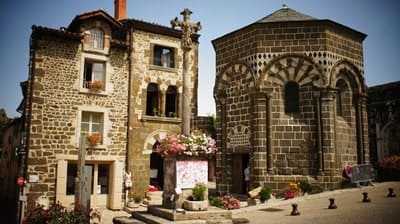 The church of Notre-Dame-du-Puy already commanded a great reputation for holiness, drawing the faithful from all directions. The very pious King Robert visited the site upon returning from Brioude in 1029. In 1087, Bishop Aymar de Monte forced the Viscount of Polignac to renounce his claims over the church. Gradually, the prelates' power grew, fueled by countless endowments born of the era's superstitious devotion, as well as the concession of several strongholds in the Velay region (1169). Louis VII (Louis the Young) became the first French king of the Capetian dynasty to levy a tax in the city of Le Puy, which he visited twice (1138-1146).
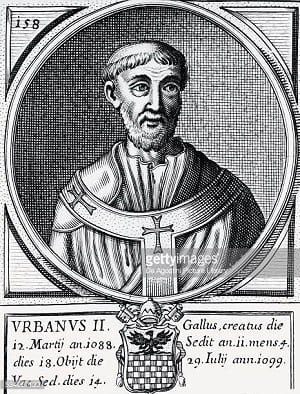
Over the years, the city hosted several popes within its walls: Urban II (1095), Gelasius II and his successor Callixtus II (1118), Alexander II (1162), and Alexander III (1165). A council was held in Le Puy in 1130, during which Innocent II was unanimously recognized as pope, and his rival, Anacletus, was excommunicated. Later, when the Albigensian heresy became a pressing threat, a legate of Pope Alexander III convened another council there in 1181 to combat it. It would take far too long to list all the kings, princes, lords, queens, noblewomen, and pilgrims of every rank, sex, and age who were drawn by the fame of the Virgin of Le Puy. Suffice it to say that on Annunciation Day in 1406—which coincided with Good Friday, triggering a special indulgence—the influx of pilgrims was so massive that no fewer than two hundred people were crushed to death in the stampede at Notre-Dame-du-Puy.
 Wars, Conflicts, and Resistance
Before embarking on his crusade to the Holy Land, King Philip Augustus traveled to Le Puy in 1188 to seek the Virgin's blessing for his expedition. A few years later, violent disputes erupted between the Bishop of Le Puy, Robert of Mehun, and the city's inhabitants. The king intervened in favor of the bishop, who was shortly thereafter assassinated in Saint-Germain by a man named Bertrand de Cares, whom the bishop had previously excommunicated.
In subsequent years, the townsfolk repeatedly tried to break free from their prelate's temporal power, but the bishop, backed by royal authority, consistently brought them back into line (1219-1236). King Louis IX (Saint Louis) met with James I, King of Aragon, in Le Puy and spent three days there upon his return from Palestine, receiving the right of lodging from the townsmen, the bishop, and the chapter (1243-1254). However, a tragic riot soon shook Le Puy after local soldiers pillaged the surrounding countryside. Two judicial officers were murdered by the enraged mob, resulting in the commune being stripped of its consulate and privileges for a long period (1277). Philip III the Bold and Philip IV the Fair also visited the city, in 1283 and 1285 respectively. Bishop Jean de Cuménis was among the prelates who supported Philip the Fair against Pope Boniface VIII, appealing the papacy's overreach to the next council (1283-1285-1313).
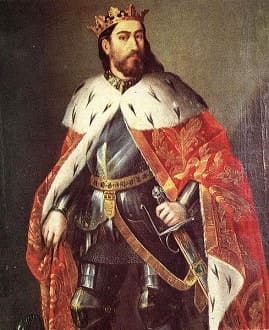
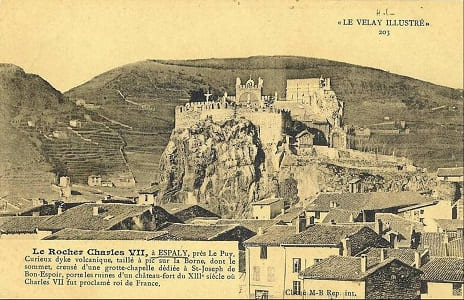 During the captivity of King John the Good, the inhabitants of Le Puy took up arms and successfully halted English raids near Clermont (1359). Charles VI, hoping to cure his bouts of madness, undertook two pilgrimages to Le Puy, where he practiced the royal touch on sufferers of scrofula (the King's Evil). The same king capped the number of city consuls at six, and, displeased with the color of their robes and hoods, decreed that they must be made of scarlet cloth instead of blue (1389-1394). At the dawn of the 15th century, the lords of Velay found themselves fighting both the English and the Duke of Burgundy. They barricaded themselves inside Le Puy, which the Duke attempted to capture in a surprise attack, hoping its fall would trigger the surrender of Vivarais and Gévaudan. However, the city's fierce resistance demoralized the attacking forces, led by the Prince of Orange (1419). Shortly thereafter, the Dauphin—soon to be Charles VII—entered Le Puy after pacifying Languedoc and knighted those who had distinguished themselves against the Burgundians. He was residing at the nearby Château d'Espaly when he received news of his father's death, and it was there that he was proclaimed King of France (1420-1422).
During the War of the Public Weal, the Velay region remained loyal to the crown despite the rebellious efforts of the Count of Polignac and the Bishop of Le Puy. The provincial governor's shrewd tactics prevented the city from joining the uprising (1460). The Queen of France, Charlotte of Savoy, visited Le Puy in 1470, and Louis XI himself made a pilgrimage there six years later to complete a novena. In 1482, Le Puy was struck by a devastating plague, preceded by a violent storm that ruined the harvest and caused widespread famine. The epidemic claimed 17,000 lives; the victims were hastily buried in mass graves at Clusel on the Martouret square, exactly where the town hall stands today. The plague resurfaced in 1521 and wreaked havoc once more in 1547. Terrified residents fled to the countryside, and even the consuls abandoned the city, allowing grass to grow freely in the deserted streets. In safer times, religious devotion had drawn three illustrious figures to the city: French kings Charles VIII and Francis I (1495-1516), and John Stewart, Regent of Scotland (1533). In 1548, Henry II convened an extraordinary judicial session (Les Grands Jours) in Le Puy, explicitly tasked with extirpating the wretched Lutheran sect. Several heretics were consequently burned at the stake.
 The Wars of Religion and the Catholic League
When the Wars of Religion broke out, the vast majority of Le Puy's population was Catholic. The Protestant commander, Baron des Adrets, unable to lead the assault himself, dispatched his lieutenant, Blacons, with a force of seven to eight thousand men (1562). Arriving at dawn, Blacons faced a fortress defended by the finest nobles of Velay. After being violently repelled, he looted the suburb of Aiguilhe and the local monasteries before seizing the Château d'Espaly, which belonged to Bishop Sénéctère. He dismantled the castle's defenses, then launched a renewed assault on the city. Every attack failed, and he was eventually forced to lift the siege after sustaining heavy casualties. To prevent future Protestant incursions—which, fortunately, never materialized—Antoine de la Tour de Saint-Vidal, governor of Velay and Haut-Vivarais, reinforced the city's defenses and called the nobility to arms.
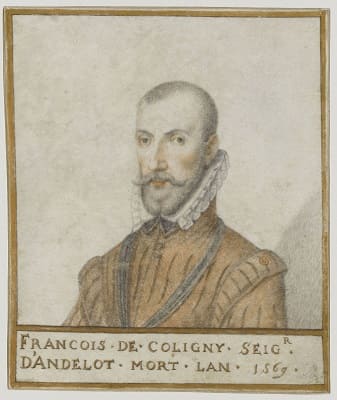
Later, additional fortifications were constructed in Le Puy. A Protestant plot to betray the city from within was uncovered and crushed by the seneschal of Rochebonne (1568). During the St. Bartholomew's Day Massacre, Bishop Sénéctère bravely refused to execute the court's bloodthirsty orders. He sheltered the local Protestants in his palace, showed them the king's letters, and moved them so deeply with his mercy that they voluntarily converted to Catholicism on the spot (1572). The city soon aligned itself with the Catholic League, and François de Coligny failed in his attempt to take it by surprise (1585). La Tour de Saint-Vidal, a fervent supporter of the Guise faction, led the citizens in swearing an oath to the Holy Union against King Henry III. A delegation from Toulouse helped cement their resolve, and the bishop himself led by example. Outraged, the king appointed François de Chaste as the new governor of Velay, but the people of Le Puy steadfastly refused to recognize anyone other than Baron de Saint-Vidal. In the baron's absence, they elected a council of twenty-four citizens to govern the city, modeling it after the Council of the Sixteen in Paris and the Council of the Eighteen in Toulouse. Upon Henry III's assassination, Chaste and the bishop recognized Henry IV as the rightful king, while the citizens of Le Puy, fiercely loyal to Saint-Vidal, prepared for war.
 The Leaguers in Le Puy published a decree from the parliament of Toulouse authorizing the confiscation of royalists' property to fund the war effort. They then marched on the Château de Polignac, razing its defenses, and launched raids against the castles of Ceyssac and Espaly (1589-1590). Saint-Vidal, returning as the newly minted governor of Gévaudan with an army of five to six thousand men, successfully forced the surrender of Espaly and blew up its fortifications. However, during a supposed peace meeting, he became embroiled in a violent argument with Chaste, fought him in a duel, and was killed. The Leaguers of Le Puy gave him a magnificent funeral and renewed their vow never to recognize Henry IV or his supporters; they even burned an effigy of the "Béarnais" king in the public square. Royalist forces attempted a night raid to take the city, but their plot was uncovered, resulting in a massacre of their ranks.
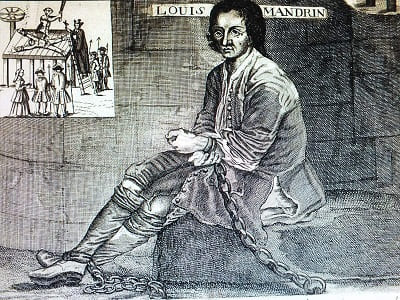
Many prominent royalist leaders, including Seneschal Chaste, died in the ensuing chaos. Citizens suspected of treason were thrown into prison, and the most prominent among them were hanged in the Martouret square. Ultimately, abandoned by their allies, exhausted from guarding the walls every other night and digging trenches by day, drained by wartime taxes, and terrified of an uprising by the peasant rebels known as the Croquants, the people of Le Puy gave up the fight. They signed a peace treaty with Henry IV, who pragmatically granted them a five-year tax exemption (1591-1596). Since then, the history of Le Puy has been largely quiet. The only notable incident was the audacious raid by the infamous smuggler and thief Louis Mandrin in 1754. Slipping past the guards, he infiltrated the city, ransacked the home of the chief tax collector, broke into the prison to free his associates, and calmly rode out to continue his crime spree elsewhere.
 Modern Era: Heritage, Economy, and Monuments
Le Puy, the historical capital of the Velay region and the seat of its provincial estates, was once a formidable military stronghold, ranked as the sixth most important city in Languedoc. Its coat of arms, restored by royal decree during the Bourbon Restoration, features a blue field scattered with French lilies, overlaid with a silver eagle with lowered wings; the shield is flanked by two green palm branches tied with a blue ribbon. These arms were originally granted by the Capetian kings around the year 992, at the request of Guy Foulques, Bishop of Velay. Today, Le Puy is home to an agricultural, scientific, and artistic society, a museum of fine arts and antiquities, a library, a college, and civil and commercial courts. It remains a bishopric, with a population exceeding 15,000. The Haute-Loire department, of which it is the prefecture, is home to nearly 299,000 residents, while the surrounding district numbers 132,500. The neighboring town of Espaly, in the same canton, has roughly 1,200 inhabitants.
 In addition to the historical figures already mentioned, Le Puy is the birthplace of Pope Clement IV, elected in the 13th century; the writer Irail; the painter Boyer; and the painters Guy (father and son), known respectively as "The Great" and "The Illustrious". The father made his name in Italy as Guide Franciste, while the son achieved fame in Paris—a reputation well-deserved, as evidenced by one of his masterpieces still displayed in the Cathedral of Notre-Dame-du-Puy. Other notable natives include the Baron de Latour-Maubourg, a Marshal of France, and Cardinal Melchior de Polignac, a member of the Académie Française whose name is permanently etched into French political and literary history. As a key negotiator of the Peace of Utrecht and the author of the Anti-Lucretius, he remains one of the great minds of the Louis XIV era.
Trade in Le Puy primarily revolves around lace, seeds, and vegetables, which are exported to the southern departments. The production of stitched leather wineskins—highly practical for transporting wine across the mountains—was once a booming industry, though it has since heavily declined. Despite a general commercial downturn, Le Puy retains factories producing black and white lace, wineskins, blankets, and coarse woolen cloth. The town also supports a wool spinning and dyeing mill, a nail factory, and foundries casting pots, cauldrons, and bells—wares that muleteers from across central and southern France have been purchasing here for over a century. Additionally, the local economy is supported by goatskin tanneries, a paper mill, and lime kilns.
Built like a natural amphitheater on the slopes of Mont-Corneille, near the Borne and Dolaison rivers just a league from their confluence with the Loire, the city offers an incredibly picturesque view. Yet, while stunning from afar, navigating its interior can be a challenge. The steep, narrow, and sometimes grimy streets of the upper town are entirely inaccessible to carriages. Paved with volcanic rock quarried directly from Mont-Corneille, the cobblestones become notoriously slick in the rain, frost, or extreme heat, posing a genuine hazard to visitors unfamiliar with the terrain.
Nevertheless, the city boasts charming areas like the Breuil promenade. Its architectural crown jewel is undoubtedly the Cathedral of Notre-Dame, renowned for its bold, eccentric design and magnificent façade. The Church of Saint-Laurent holds deep national significance, as it houses the entrails of the legendary French knight Bertrand du Guesclin. The Church of Saint-Michel d'Aiguilhe, a beautiful piece of Gothic antiquity, is made truly extraordinary by its location: it is perched atop a steep volcanic needle. Its slender bell tower acts as a natural obelisk, seamlessly blending into the conical rock from a distance. Finally, visitors can admire a circular structure known locally as the Temple of Diana. Among its modern buildings, the prefecture, the town hall, the Hôtel-Dieu, the general hospital, the seminary, and the cavalry barracks in the Saint-Laurent suburb near the Estrouilhas bridge stand out as significant landmarks. (From "Histoire des villes de France", published by Aristide Guilbert)