


The history of Mende, the prefecture of Lozère, is deeply rooted in time, dating back to Antiquity when it was known as Mimate. Its medieval growth was heavily influenced by the bishop-counts of Gévaudan, who established their seat there and conferred great religious and political importance upon the town, best materialized by the construction of its majestic cathedral. The city became a dynamic commercial hub, notably due to the fairs and markets held there, favored by its strategic position along major trade routes. In the 16th century, Mende suffered the ravages of the Wars of Religion, particularly the siege of 1581 led by the Huguenot captain Merle, which left lasting marks on its architecture. During the Ancien Régime, the city maintained its crucial role as an administrative and judicial center. The French Revolution ultimately solidified its status as the capital of the department.
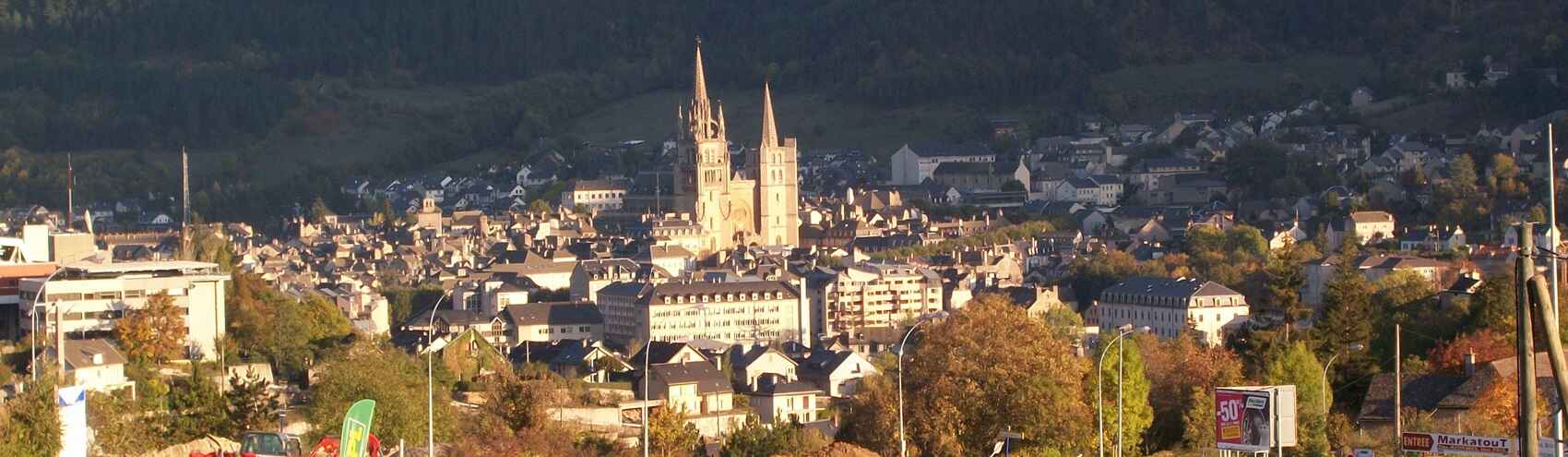
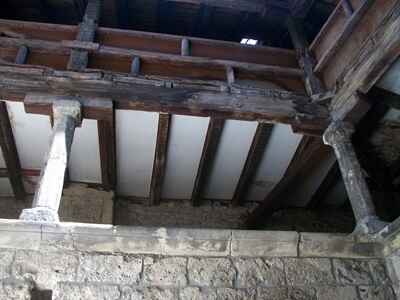
Mende is an ancient city situated on the left bank of the Lot River, 567 kilometers southeast of Paris. As the capital of the Lozère department, an arrondissement, and a district, it features a first-instance court, a bishopric, a diocesan seminary, a college, a consulting chamber for manufactures, and a society of agriculture, sciences, and arts. It was once the capital of a county, as well as the seat of a bishopric and a bailiwick dependent on the parliament of Toulouse and the generality of Montpellier. Historically, it housed a college, a seminary, and several convents, including those of the Cordeliers, Carmelites, Capuchins, and Ursulines.
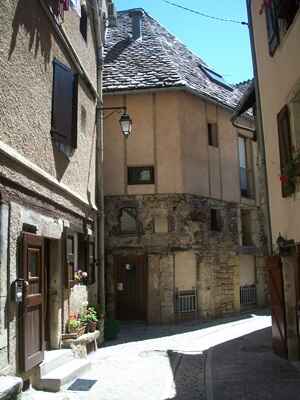
In the 4th century, the city was merely a small village (viculus), consisting of scattered dwellings along the left bank of the Lot, below Mount Mimat—which gave the town its name—in the midst of a land abundant in dairy products and silver mines. Following the destruction of Gabalum and the siege of Grèzes (Castrum Gredonense) by the Vandals in 376, Saint Privat, the apostle of the Gabales, sought refuge in a nearby cave on Mount Mimat. Surprised by the barbarians, he steadfastly refused to sacrifice to their idols. According to legend, they placed the saint in a barrel lined with sharp blades and rolled him down the mountain. However, pious souls secretly gathered the martyr's body and gave him a proper burial.
After the departure of the Vandals, a church was built over his tomb. Soon famous for the miracles performed by his relics, this place—which, according to the chronicler Adon, was originally just a simple farm or hamlet—became populated and covered with houses. It gradually formed a city so considerable that Gabalum was completely abandoned. Mende inherited the power of the ancient city of the Gabales, becoming the capital of Gévaudan, and the episcopal seat was transferred there from Javoux. This solemn transfer was marked by the placement of Saint Privat's relics in the church. Since then, the episcopal seat has always remained in this city, serving as a suffragan to the archdiocese of Bourges until the establishment of the archbishopric of Albi. Raymond of Saint-Gilles, count of Toulouse and Gévaudan, is said to have ceded his rights over this territory to the bishops of Mende.
Bishop Adalbert, who held this seat in 1161, ordered the construction of defensive walls around Mende, transforming the village into a true city. Having paid homage for his rights to King Louis VII, Adalbert obtained a golden bull. In this charter, the king stated: "Since no memory of man has seen any bishop of Gévaudan come to the court of the kings of France, his predecessors, to swear them loyalty—because this land, difficult to access, had always been under the power of the bishops who exercised temporal and spiritual authority there—Adalbert, knowing that royal justice belonged to royal authority, had come to acknowledge, in the presence of the principal barons of the kingdom, that his bishopric depended on the crown of France, and that, submitting to the person of the king, he had sworn loyalty to him." The king further declared that "this act does not prejudice in any way the rights which the Gabalite bishops had always enjoyed," granting Adalbert and his successors the bishopric of the Gabales with regal rights, and decreeing that the church should be free and exempt from all exactions.
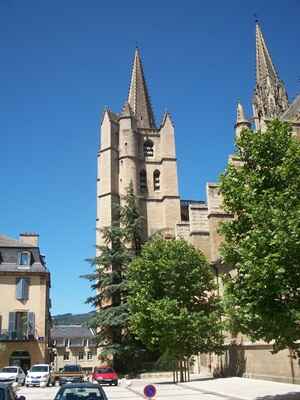 This marked the origin of the temporal power that the bishops of Mende enjoyed until the Revolution. They served as high justiciaries of the city and held the right to mint coins, even claiming full sovereignty over the land. It is reported that these prelates, when officiating pontifically, had a golden scepter placed before them at the altar. One of them, William of Peyre, was not content merely to wage war against the King of Aragon; he also fought against his own vassals in 1223. These vassals rose up and drove the bishop away, though he soon returned to resume his intrigues. In 1225, he ceded Gévaudan to James, King of Aragon, yet his successors continued to claim their rights over this land. By 1306, however, royal power had grown significantly. Feeling too weak to resist the Crown, the bishop of Mende consented to share the lordship and justice of Gévaudan with Philip the Fair. Under this treaty, the bishop was recognized as a count, and the king as the sovereign of the land.
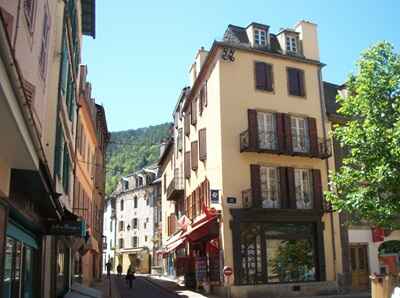
Before 1789, justice was still rendered in their names. When it was the king's turn, it was administered in Marvejols; when it was the bishop's turn, it was administered in Mende. The bishop also presided over the states of Gévaudan. Among the episcopal seats of France, Mende is notably illustrious, counting seventy-two bishops—five of whom are saints—one pope (Urban V), and six cardinals.
During the war between Charles VII and Louis XI against the Armagnacs, the inhabitants of Mende declared their support for the monarchy. To reward the consuls and citizens, Louis XI allowed them in 1479 to add two lilies to the top of their shield. Furthermore, in 1475, he appointed John Petit, the bishop of Mende, as his lieutenant general in Languedoc, granting the city various privileges. The bishop, acting as the lord of the city, opposed the execution of the king's letters. In response, the king bypassed him and added a crowned 'L' between the two lilies on the coat of arms he had granted to the city (1475).
In the 16th century, Mende suffered heavily during the Wars of Religion. Besieged and taken by Protestants in 1562, who left only a small garrison, it was subsequently retaken by Catholics. However, on Christmas night in 1579, while the inhabitants were gathered in the churches, Captain Merle led a band of Calvinists over the city walls, capturing the main square before the citizens could organize a defense. The governor attempted to defend the city but was killed, and soldiers taking refuge in a tower were forced to surrender. A large number of Catholics were slaughtered, and the city was largely burned and razed. Subsequently, the Catholic nobility of Gévaudan, Velay, Auvergne, and Vivarais gathered in Chanac under the command of Saint-Vidal and Christophe d'Apcher, determined to drive the reformists out of Mende.
Saint-Vidal and d'Apcher sent messengers ordering Captain Merle to surrender the city. Merle defiantly replied that he was expecting them, and if they did not come to him, he would go to them. He kept his word. Leading a hundred men-at-arms and two hundred mounted arquebusiers, he secretly marched out of Mende by night, arrived at Chanac, forced the gates, overpowered the guards, and breached the city. He departed loaded with loot, taking with him two hundred battle horses captured from the Catholics (1580).
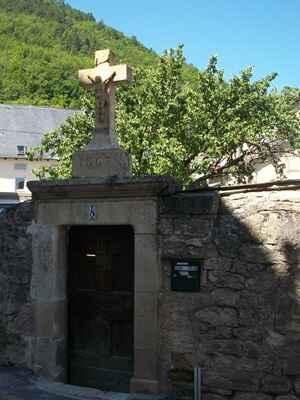 Châtillon, who commanded in Lower Languedoc for the King of Navarre, eventually persuaded Captain Merle to leave Mende under the pretense that he needed his assistance for a siege. In reality, his goal was to distance Merle from a city where his brutal excesses were compromising the cause of the Reformation. Merle fell into the trap, allowing Châtillon to take Mende and establish a garrison there. Furious at having been deceived, the Huguenot captain launched a surprise attack on the city, plundered it, and expelled the inhabitants he deemed suspicious. Although he later evacuated the town, he did so willingly under a treaty with terms he personally dictated (1581). At that time, Mende housed several incredibly wealthy churches. It is reported that the Calvinists looted more than two hundred and eighty marks of silver in the form of sacred vessels and reliquaries, even melting down the cathedral's large bell to forge cannons.
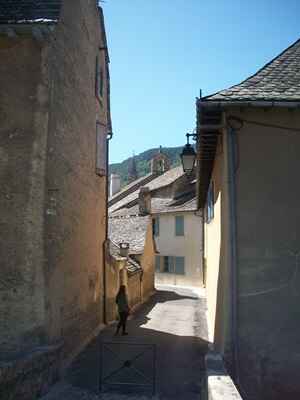 At the end of the 16th century, in 1595, Mende fell under the control of the Duke of Joyeuse. He ordered the construction of a citadel, which was later razed in 1597 after Henri IV brought the city under his obedience. Following its dismantling, the city took no further part in the civil and religious wars that erupted across the country under Louis XIII and Louis XIV.
Mende rises in a charming valley along the banks of the Lot River, at the foot of mountains from which numerous springs flow, winding through the gardens and meadows of the scattered bastides surrounding the city. Nothing is more picturesque than the view of these small white houses set amidst fertile fields and flourishing orchards. Seen from afar, with its distinctive triangular shape, soaring steeples, and slate roofs, Mende easily enchants the traveler's eye. Its church is particularly remarkable. Originally built in the Claustres quarter—named for the cloister attached to it—it soon became too small for the large clergy and the ever-growing population of the city, necessitating the construction of a much larger nave.
To this end, at the request of Pope Urban V (a former bishop of Mende), King Charles V ordered a census of the households in Gévaudan in 1364, taxing each at one florin. Construction began in 1366, but the monumental reconstruction was not completed until 1467. In the 16th century, this church was exceptionally rich in ornaments, sacred vessels, chasubles, and gold, silver, and vermeil treasures, all owed to the munificence of Pope Urban V and local bishops. Sadly, the Wars of Religion stripped the cathedral of these riches. Despite being somewhat poorly restored in 1620, and housing a clergy of more than a hundred beneficiaries at the time, it remains a vast and majestic edifice today.
Built in the Gothic style, it features three naves and is topped by two steeples, the taller of which is considered a true masterpiece. Nothing is more elegant and bold than its structure, intricate lacy ornaments, slender columns, galleries, and the towering height of its spire. Visitors must climb 241 steps to reach the fourth gallery, where the clock is located. The octagonal spire features interior openings at the top that closely resemble those of minarets.
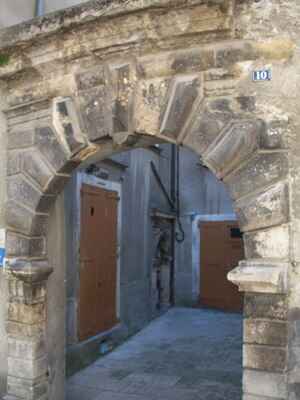 Before the 16th-century wars, the tower housed a massive bell known as the nonpareille (the unparalleled). This was the very bell that the Calvinists converted into cannons in 1579. Today, an inverted cone-shaped dome, which reportedly represents the bell's original dimensions, crowns the spiral staircase tower. Following the Hundred Days, the prefect of Lozère and Marshal Soult were imprisoned in this bell tower; fortunately, the excesses of the royalist reaction in Mende ended there.
 The city once hosted a convent of Cordeliers, founded around the year 1220 by Saint Anthony of Padua. After being pillaged and sacked by the Huguenots, it was restored thanks to the generosity of the high barons of Gévaudan, whose coats of arms were displayed above the church portal and whose tombs surrounded the forecourt. It appears that these lords, despite not residing in Mende and having burial sites in the parish churches of their own lands, preferred to be buried in this specific church.
Several years ago, during clearing works, bones and a ring were discovered under the flooring. The ring's bezel featured an engraved coat of arms. It is believed to have belonged to one of these barons, who, being unable to read or write as was common at the time, used his ring to seal documents, much as others used the pommel of their swords.
Since then, Mende has continuously strived to beautify itself. Its boulevards and new streets are lined with highly attractive buildings. Its courthouse, the Fountain of the Griffins, Urban V Square (featuring a statue of the pope who founded the cathedral), the city hall, the former episcopal palace, the prefecture, the library, the museum, and the vast barracks stand alongside the cathedral as the city's most remarkable monuments. On the steep, bare slope of Mount Mimat overlooking the city lies the hermitage of Saint Privat, partly carved directly into the rock. Located 200 meters above the town, the hermitage is accessible via a path dotted with stations for faithful pilgrims. Historically, the city had a considerable trade in a common cloth known as Mende serge, which was exported to other departments and abroad. A large portion of the population earned their livelihood from this textile production. The inhabitants of Mende are known for being gentle, affable, and considerate.
This city is the birthplace of the prominent doctor Antoine Blauquet.
The former coat of arms of Mende was: azure, with a capital Gothic letter M in silver, topped by a capital L in gold, and flanked by two golden lilies. Today, the arms are: azure, with a capital Gothic letter M in silver (or sometimes gold), crowned with a golden sun at the top. The city's motto is: TENEBRE EAM NON COMPREHENDERUNT (The darkness did not comprehend it).