


Mende, a discreet prefecture with a prestigious past, flourishes in the heart of the Lot Valley, in the Lozère department. Its history is closely intertwined with that of the powerful bishops of Gévaudan, who established the city as an influential religious and political center as early as the Middle Ages. Its architectural heritage bears witness to this past grandeur, notably the majestic Cathedral of Notre-Dame-et-Saint-Privat, rebuilt after the Wars of Religion, whose atypical bell tower proudly dominates the cityscape. The cobbled streets and timber-framed houses of the historic center invite visitors for a timeless stroll. The city also harbors the Notre-Dame Bridge, a true architectural gem from the 14th century. Nestled between the wild landscapes of the Aubrac and the Cévennes, Mende serves as a prime gateway to preserved nature and authentic local culture.
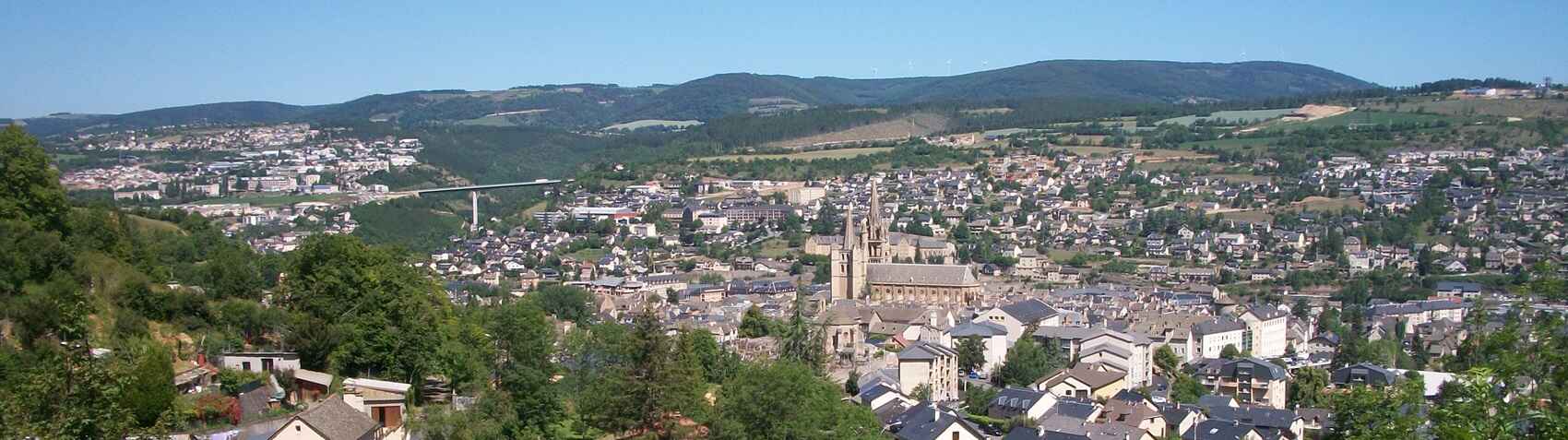
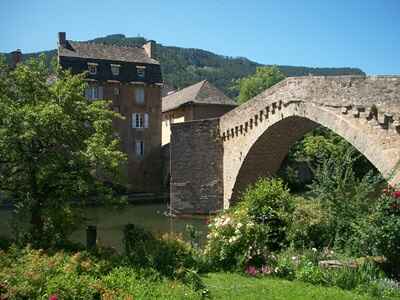
Located in southern France, in the heart of the Occitanie region, Mende is the proud prefecture of the Lozère department. It boasts a remarkable heritage, punctuated by iconic monuments such as its cathedral, its medieval bridge, and the Penitents' Tower. The city also shines through its cultural vibrancy, driven every summer by the renowned Mende Music Festival. It is the ideal starting point to explore the surrounding treasures: the spectacular Tarn Gorges, the Aubrac mountains, and the Cévennes National Park—a true paradise for hiking, mountain biking, and fishing.
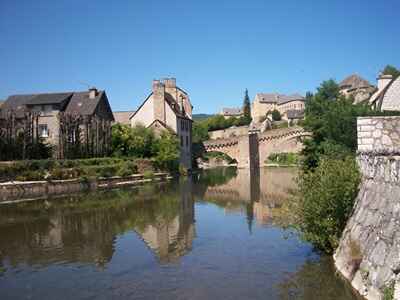
As the former capital of Gévaudan, Mende became the seat of the bishopric in the 10th century, succeeding the fallen city of Javols. The foundations of the modern city date back to the 5th century, developing around the tomb of Saint Privat on the peaceful banks of the Lot River. As the true geographical heart of Lozère, Mende sits exactly in the center of the department. Remarkably, within a century, while Lozère's overall population was halved, the prefecture saw its inhabitants increase from 8,000 to 12,000, centralizing local dynamism. Traversed by the Lot, which originates near Le Bleymard, the city is split in two by this river that generously irrigates and fertilizes its entire valley.
By comparison, the Altier Valley, with its more turbulent waters originating on the wild slopes of Mont Lozère, proves less prosperous agriculturally. However, this deeply entrenched valley has developed a completely different kind of wealth: its waters, tamed by hydroelectric dams like the one in Villefort, give it a strong industrial focus. These valleys thus complement each other perfectly, while Mende today stands out with an economy strongly oriented towards the tertiary and administrative sectors.
In Roman times, the settlement was merely a modest village called "Viculus Mimatensis." The city's true expansion occurred in the 3rd century: pursued by barbarian invasions, Bishop Saint Privat sought refuge here before being martyred. The caves he inhabited as a hermit and his burial site quickly became major pilgrimage destinations, catalyzing the city's development.
 In 1161, Bishop Aldebert obtained a charter granting him absolute suzerainty over Gévaudan. To assert his authority against rebellious local lords, he had the city ringed with sturdy ramparts. A partition agreement ("acte de paréage") concluded in 1307 between the bishop and King Philip the Fair definitively established Mende as the civil and religious capital of the territory. Barely recovered from the ravages of the Hundred Years' War, the city suffered violent assaults in the 16th century by the Huguenot captain Mathieu Merle, who captured and occupied it for two years. In the 19th century, Mende fully established itself as an administrative center, witnessing the emergence of a few industrial initiatives.
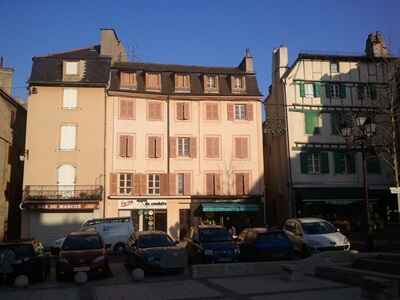 Lozère's prefecture, with its glorious past, is the ideal starting point for exploring the Grands Causses and the Tarn Gorges. Its majestic cathedral, built in the 14th century and crowned with a flamboyant 16th-century bell tower, once housed the "Non Pareille," renowned as the largest bell in Christendom. Melted down in 1579 by Mathieu Merle's troops to make cannons, only its colossal 2.15-meter-high clapper remains today. A few steps away, the 14th-century Notre-Dame Bridge has always withstood the violent floods of the Lot River, thanks to the exceptional width of its central arch.
Leaving Mende to the south via the D25 road, you reach the spectacular Mont Mimat viewpoint, offering breathtaking panoramas of the Aubrac mountains and the Lot Valley. From this vantage point, a steep trail climbs to the hermitage of Saint Privat, quite literally clinging to the cliffside.
Holding the title of France's smallest prefecture, Mende is an authentic "city in the country," peacefully nestled against the causse. It is harmoniously divided by the Lot River, which separates the historic center from modern residential neighborhoods. If the people of Mende owe the hermitage to Saint Privat and the cathedral to Pope Urban V, it is to their own fervor that they owe the remarkable preservation of their heritage. In Mende, the love of beautiful stone, sculpture, and architectural harmony is cultivated and proudly displayed.
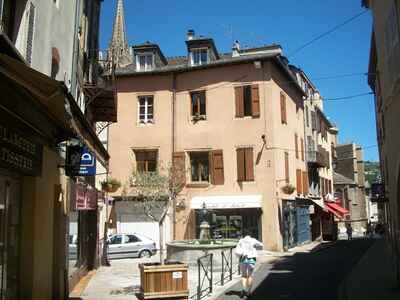
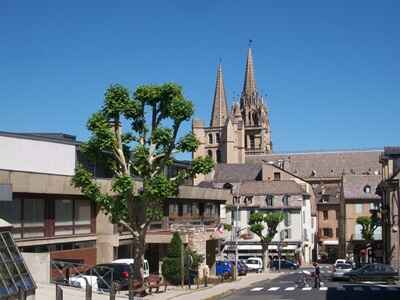 The noble mansions patinated by centuries, the maze of cobbled streets, and the traditional schist slate roofs constitute a first-rate aesthetic jewel. During the summer, the city comes alive with discovery walks through the medieval town and nocturnal musical strolls that beautifully highlight the illuminated monuments. Guided tours and informational panels line the route, allowing visitors to unlock all the secrets of this exceptional heritage.
Offering a perfect balance between urban dynamism and rural tranquility, Mende guarantees an exceptional quality of life that it warmly shares with its visitors. Ideally nestled between the Margeride mountains to the north and the causses to the south, it is the perfect base camp for exploring all of Lozère. However, to fully grasp the soul of the former capital of Gévaudan, it is highly recommended to linger here for a few days.
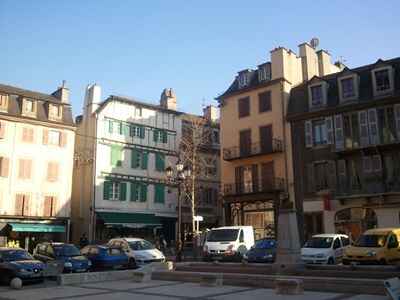 Proving its undeniable vitality, Mende has repeatedly distinguished itself as one of the most sports-oriented cities in France. It nurtures the legitimate ambition to develop as a dynamic metropolis, while sparing itself the constraints of its larger sister cities thanks to its natural anchoring. With the creation of business incubators focused on new technologies and its connection to the Massif Central city network (alongside Rodez, Aurillac, and Le Puy-en-Velay), Mende is resolutely opening up to the future and innovation.
Looking toward the stars, the city supports ambitious astronomy projects. From the Causse of Mende, which hosts an astronomical observation center equipped with a large telescope, the conditions for viewing the night sky are truly exceptional.
Deeply marked by the seal of history, Mende navigates nimbly into modernity. Its daily bustling, punctuated by lively markets, the large monthly fair, and local artisans, contributes to its undeniable charm. Here, commerce and social life thrive above all on conviviality, human connection, and simplicity, inviting everyone to take the time to truly live.
In Mende, the motto is simple: enjoy the sweetness of life. A stroll at the foot of the Penitents' Tower or in the cathedral square is enough to convince any visitor that this city, nestled just a stone's throw from wild nature, is a deeply endearing destination.