


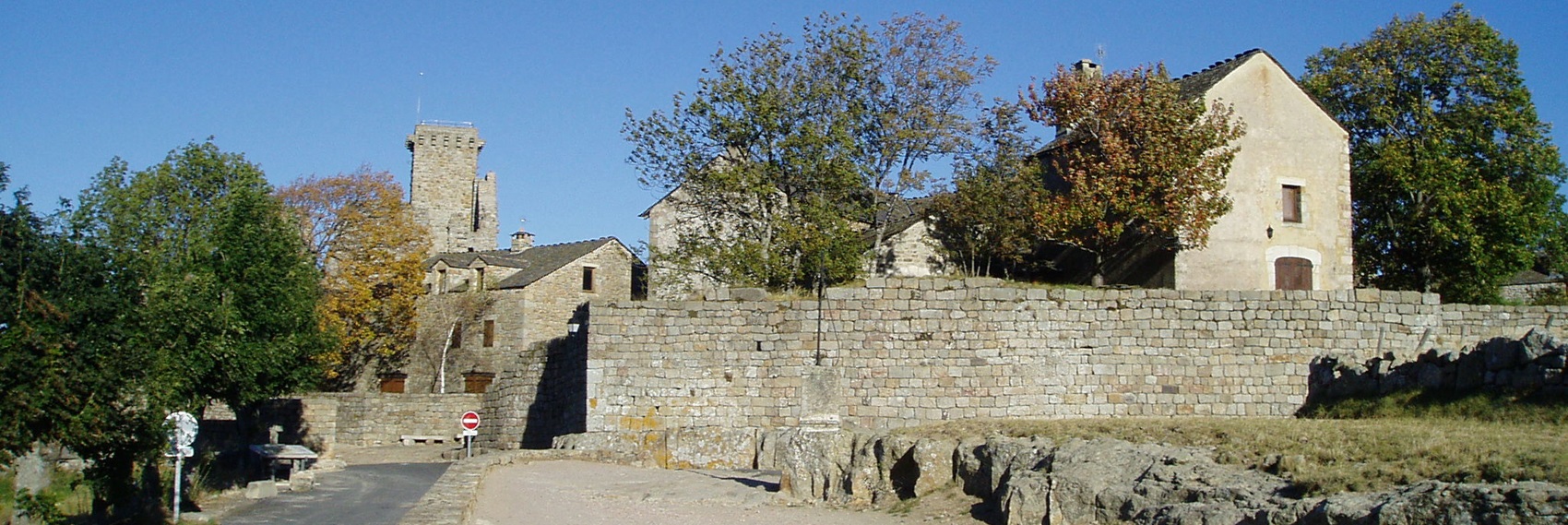
Around 1912: Mr. Nodet, architect of Historical Monuments in Montpellier, discovered La Garde-Guérin. Fascinated, he sent his first official report to the Administration of Fine Arts in Paris, describing an exceptional fortified village that deserved to be restored.
November 30, 1929: The decree officially classifying the entire village of La Garde-Guérin as a picturesque site, along with its keep, castle, and Saint-Michel church as historical monuments, was published.
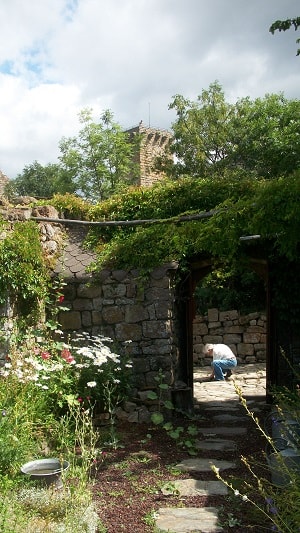
In 1935: The Department of Fine Arts undertook major repairs on the church and the castle. During the church's restoration, bones were found in the crypt beneath the choir—possibly the remains of former noble consuls of La Garde. Abbot Négron respectfully had them transferred to the parish cemetery.
In 1965: René Schmitt, architect of the Bâtiments de France in Lozère, was deeply concerned about the village's deterioration and depopulation. He decided to alert his Ministry and sent a detailed report to the Architecture Directorate in Paris. In October, he invited a dozen departmental figures (local elected officials, administrative representatives, etc.) to a meeting held in Villefort on November 14, 1965. Following this decisive meeting, the Association for the Preservation of La Garde-Guérin (Association de Sauvegarde de La Garde-Guérin) was founded.
In 1970: As part of the "101 measures for the environment" adopted by the government, La Garde-Guérin was designated a pilot village. Spearheaded by Michel Denieul, Director of Architecture, who personally visited the site, the village's restoration and development were organized with joint financial support from three ministries: Cultural Affairs, Agriculture, and Infrastructure. Other entities such as E.D.F., P.T.T., S.A.F.E.R., and the intercommunal syndicate also intervened in their respective fields.
The Association for the Preservation of La Garde-Guérin, officially created on May 18, 1967, had proactively conducted a study on the architectural and economic future of the village (cadastral surveys, meetings with owners, information sessions, market research for a future inn, etc.). It provided invaluable support to Mr. Schmitt, who was responsible for coordinating the financing plan and directing the works. These varied projects aimed to combine strict preservation of architectural heritage with the site's economic and tourist development.
On an architectural level:
- Clearing and restoring a large part of the ramparts.
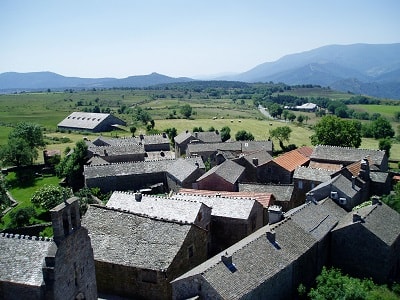
- Complete replacement of the roofs.
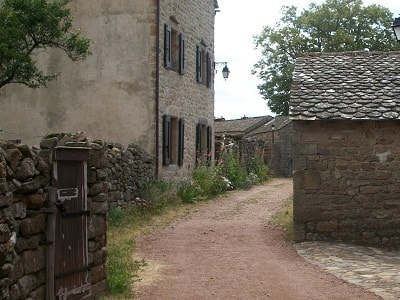
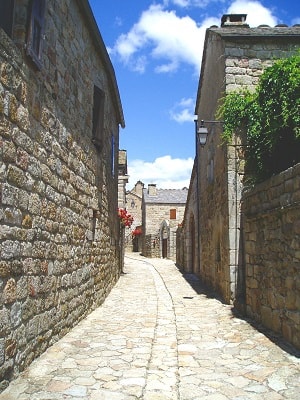
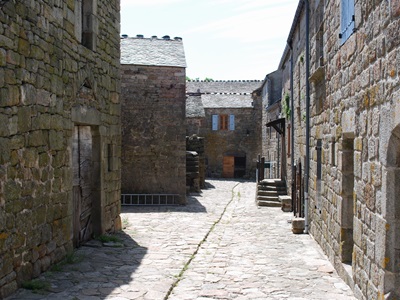
- Traditional paving of the streets.
- Underground installation of utility networks (electricity, telephone, television) connected to each house, thus allowing the village to retain its authentic medieval character.
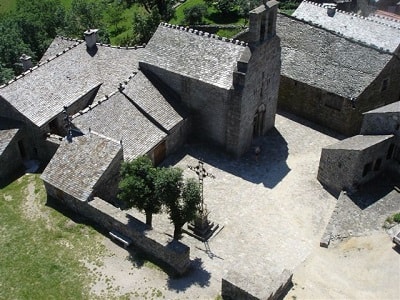
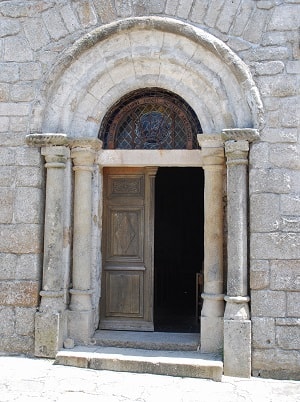
- The church was also subject to careful restoration, both architecturally and culturally: removal of the exterior staircase and the 19th-century gallery, revision of the roof, disassembly of the marble altar (moved to the crypt), and installation of a new altar.
On an economic level:
The preservation of the site's historic pastoral vocation was ensured by:
- The construction of a sheepfold outside the village, perfectly integrated into the landscape.
- The extension of the water supply network.
- The preservation of the old liquid manure channel, now placed underground.
On a tourist level:
The Pansier house was transformed into a hotel-inn, creating a true hub of activity in the heart of the village. Furthermore, since 1969, the presbytery has housed the "Pariers de La Garde" association, gathering Parisian high school and university students who stay during their holidays, accompanied by their chaplain, Father Alain de La Morandais. These young people actively participate in renovating the presbytery, as well as in archaeological excavations and the restoration of the castle's underground rooms. For ten years, they also ensured a warm welcome for visitors while offering rich liturgical and cultural activities.
In 1979: Considering its initial mission largely accomplished, the Association for the Preservation of La Garde-Guérin was dissolved. However, its administrators expressed a strong desire for the village's inhabitants to take up the torch and sustain this dynamic.
November 1981: Creation of the G.A.R.D.E. Association (Group for the Improvement, Renovation, Development, and Maintenance of La Garde-Guérin). It published several reference brochures on local history and participated over the years in financing various improvement works, including:
- The restoration of a stained glass window in the church.
- Financial contribution toward the purchase of new benches for the church.
- The installation of public benches in the village.
- The setup of discreet safety barriers for access to the keep.
- The installation of wood-clad trash cans to respect the site's aesthetics.
- The purchase of fire hoses.
- Regular cleaning of the village (citizen-led weeding at the beginning of summer).
- Floral decoration of the streets during the summer season (planting rose bushes near the tower and placing potted flowers).
- Funding for certain summer events.
Since 1983: Alain Laurans, archivist at the Mende Archives, conducted major exploratory excavations in the castle's seigneurial dwelling. This meticulous work uncovered backfill (dating from the 17th to the 20th century), analyzed the destruction layer revealing the final traces of the great fire of 1722, and restored the partition wall and enclosing wall.
In 1988: In agreement with Mr. Verrot, architect of the Bâtiments de France in Mende, and the mayor of Prévenchères, the G.A.R.D.E. Association decided to initiate a multi-year program to restore and protect the architectural and natural heritage of La Garde-Guérin. These major operations were co-financed by the Bâtiments de France, the municipality of Prévenchères, the G.A.R.D.E. Association (for the first phase), the Departmental Council, and the Region.
Summer 1989: Sealing and urgent repair of the northern breach in the rampart, which threatened to collapse. Concurrently, the Bâtiments de France and the municipality of Prévenchères financed the repair of the presbytery's roof structure and its traditional lauze roofing. They also supported works carried out at the old village school between autumn 1989 and spring 1990: fitting out a beautiful multipurpose room on the ground floor for the inhabitants and creating a welcoming stopover gîte on the upper floors.
Summer 1990: Meticulous restoration of the rampart located to the right of the village's main entrance, over an impressive length of 50 meters.
Winter 1990-1991: Repair of the inner facing of the northern rampart. These first two phases of work saved the most damaged portion of the fortified wall and restored its continuity on the village side. New interventions, constantly blending heritage preservation with public utility, are already planned.
Indicative Bibliography:
- The various thematic brochures published on La Garde-Guérin by the G.A.R.D.E. Association.
- Histoire de Villefort et de son canton, Alain Laurans, Jean-Louis Maurin, 1990, Ed. Syndicat d'Initiative Cantonal de Villefort.
- Le chemin de Régordane, Marcel Girault, 1988, Ed. Lacour/Colporteur, Nîmes.
- Ce tant rude Gévaudan (Volumes I and II), Félix Buffière, 1985, Ed. Société des Lettres, Sciences et Arts de la Lozère.
- Dictionnaire étymologique des noms de lieux en France, A. Dauzat, Ch. Rostaing, 1984.
- Images du patrimoine. Canton de Villefort, 1989, Ministry of Culture and Communication, General Inventory of Monuments and Artistic Wealth of France, Languedoc-Roussillon Region.
- Les statuts de la Communauté des Seigneurs Pariers de La Garde-Guérin en Gévaudan (1238-1313), Ch. Porée, 1907, Excerpt from the Library of the École des chartes, Paris.
- Routes Romanes. La Garde de Dieu, Ed. Zodiaque, 1986.
- Le château dans la France médiévale, Gabriel Fournier, 1978, Ed. Aubier.
- Le Moyen-Âge, Georges Duby, History of France, Hachette.
- La civilisation de l'Occident médiéval, Jacques Le Goff.
We extend our deepest gratitude to Abbot Pierre Peyre, curator of the Mende Museum, and Abbot Jean Roux, parish priest of Vialas. Both passionate about regional history, they provided invaluable and enlightening assistance in creating this brochure.
The G.A.R.D.E. Association brings together people of goodwill, whether residents or simply lovers of this village. In close collaboration with the Bâtiments de France and local and regional elected officials, they have carried this major restoration and maintenance program for several years. This page aims to share the rich history of La Garde-Guérin, while allowing the association to continue participating in the financing of future works. If you wish to support our efforts and be regularly informed of our activities, please send your membership application to the following address: Association G.A.R.D.E., La Garde-Guérin, 48800 Villefort.