
Towards Ardèche via Thines, the Borne, and Chassezac valleys
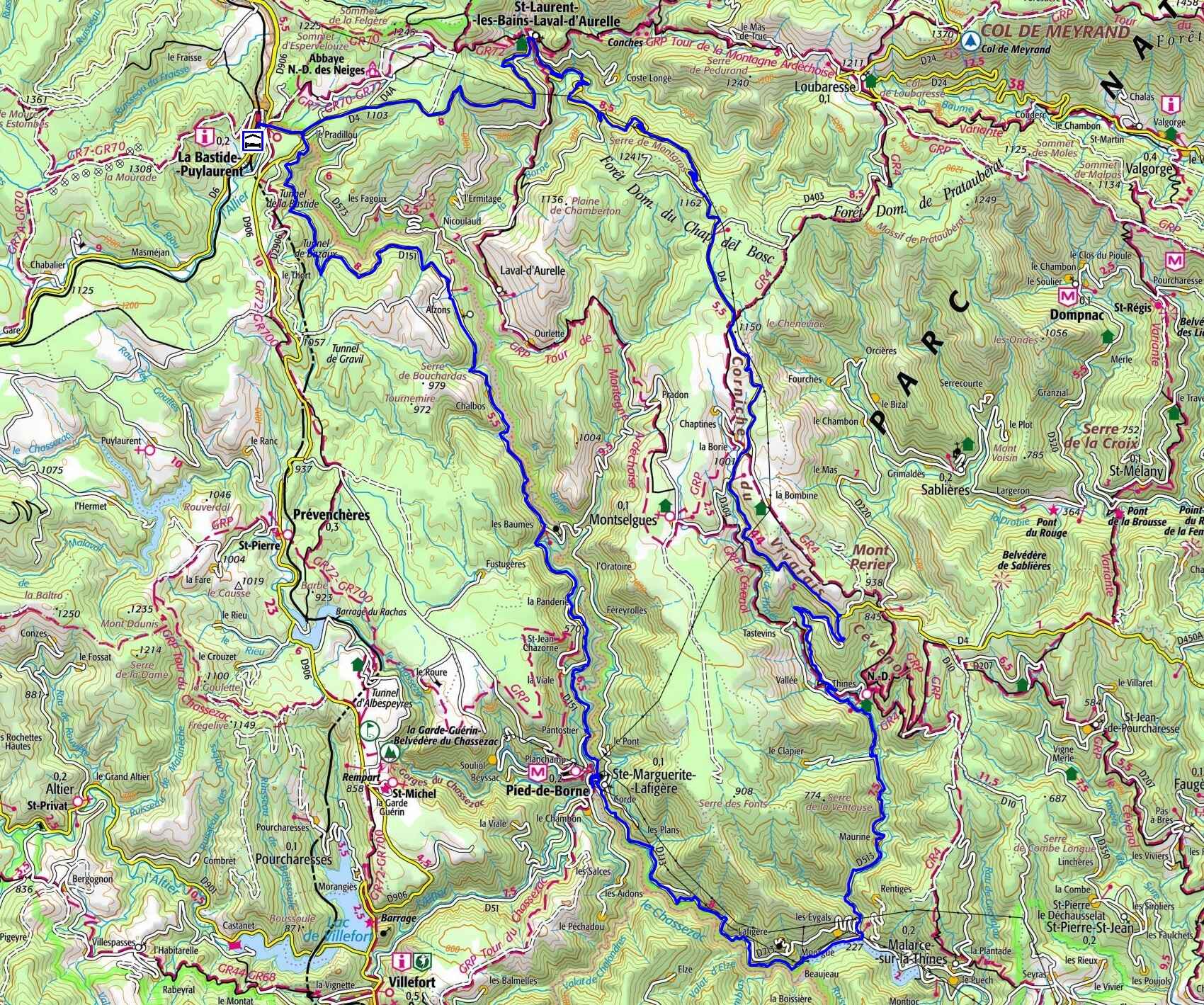
 Distance: 69 km. Maximum altitude: 1,166 m. Minimum altitude: 227 m. Total elevation gain: 1,469 m.
IGN Maps: La Bastide-Puylaurent (2738E). Largentière, La Bastide-Puylaurent, Vivarais Cévenol (2838OT). Bessèges, Les Vans, Chassezac Valley (2839OT).
From L'Étoile, head toward the center of the village, then take the road straight to Villefort. Continue until you reach the roundabout at Pradillou, turn right, and then take the first left toward Alzons and Pied-de-Borne on the D151. At the bottom of the valley, turn left toward Sainte-Marguerite-Lafigère on the D113, following the Chassezac River for 9 km. Turn left onto the D513 toward Thines. At the top of the hill, turn left onto the D4 and follow it until you reach the Pradillou roundabout, then return to La Bastide-Puylaurent.
Print the route - Electric bike rental
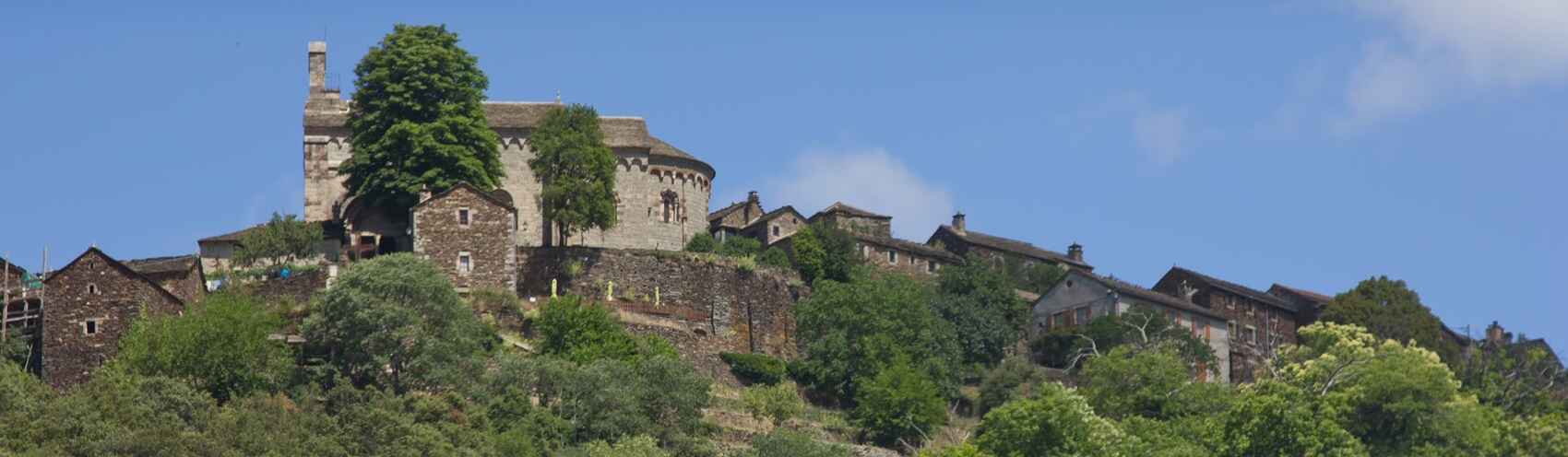
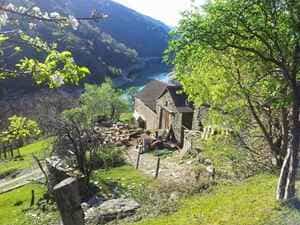
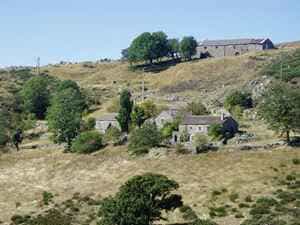
The history of Thines stretches back several centuries. This medieval village, whose name likely derives from the Latin Tinus, is nestled in the heart of a region steeped in tradition. Thines has been inhabited since Gallo-Roman times, as evidenced by archaeological remains discovered in the surrounding area. During the Middle Ages, the village flourished due to its agriculture and specialized craftsmanship, notably in the silk industry. Today, its narrow, winding streets and ancient stone houses beautifully evoke its medieval past. The Saint-Pierre church, an architectural gem dating back to the 12th century, stands as the village's most emblematic monument, silently bearing witness to the enduring importance of Thines in local history. The architectural heritage of Thines is characterized by a perfect harmony between human craftsmanship and the natural environment. The stone dwellings, often topped with rugged slate roofs, blend seamlessly into the dramatic landscape. The village is surrounded by an unspoiled wilderness, where undulating hills, deep valleys, and winding waterways offer stunning, sweeping panoramas. Furthermore, the close proximity of Thines to the Monts d'Ardèche Regional Natural Park adds an exceptional dimension to its natural heritage, making it a true sanctuary for nature lovers.
Vivarais, situated within the modern boundaries of the Ardèche department, is an ancient province of the French kingdom, defined by its rich history and powerful cultural identity. Nestled in the Massif Central between the rugged Cévennes and the sweeping Rhône Valley, the region has long been shaped by the influence of the Church. The diocese of Viviers emerged as a significant religious center as early as the 4th century. During the 16th century, Vivarais became a major focal point for the Protestant Reformation and the subsequent Wars of Religion, with Privas standing as a formidable Huguenot stronghold. These brutal conflicts left deep scars, particularly following the revocation of the Edict of Nantes in 1685, which led to the fierce persecution of the Protestant community, triggering exoduses and lingering tensions. The economy of Vivarais has historically been rooted in agriculture, livestock farming, and the silk industry. Sericulture and silk weaving boomed during the 17th and 18th centuries, bringing great prosperity to the region, though the industry later suffered a sharp decline in the 19th century due to diseases affecting silkworms and mounting industrial competition. Beyond its history, Vivarais is celebrated for its breathtakingly diverse landscapes—ranging from towering mountains and volcanic plateaus to deep river valleys. Today, these stunning vistas attract nature enthusiasts and history buffs alike, with the Ardèche gorges and their legendary prehistoric caves, such as the globally renowned Chauvet cave, drawing visitors from around the world.