Head towards the train station and cross the railway crossing. Then, turn right and follow the path that runs alongside the railway tracks. After about 1.5 km, pass under the railway tracks via a small tunnel, cross the Fraisse stream via the ford, and continue to Rogleton. Cross the D906 road and take the small street heading straight up, then turn right along the Serres stream. About 1 km further, veer right into the forest, following the Bois de Serres stream to Felgère (the former location of the abbey), then turn left towards Coulet de Pecoyol, and right towards Croix de Pal. Turn right and descend by following the GR®7, GR®72, and GRP® Tour de la Montagne Ardéchoise trails to Notre-Dame-des-Neiges Abbey. At the parking area, take the road on the right leading up to the monastery, the chapel, and the stables. Follow the small road and the markers until you reach La Bastide via the Bories and Courège farms.
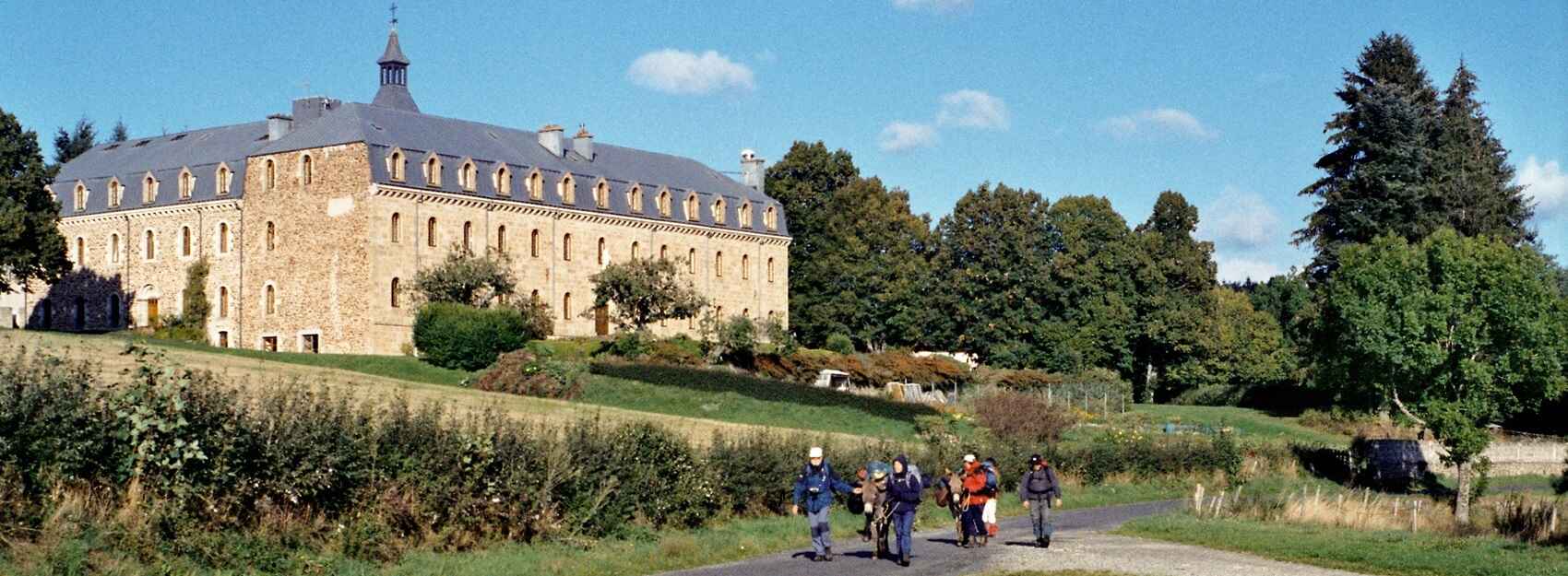
Circular hike to Notre-Dame-des-Neiges Abbey
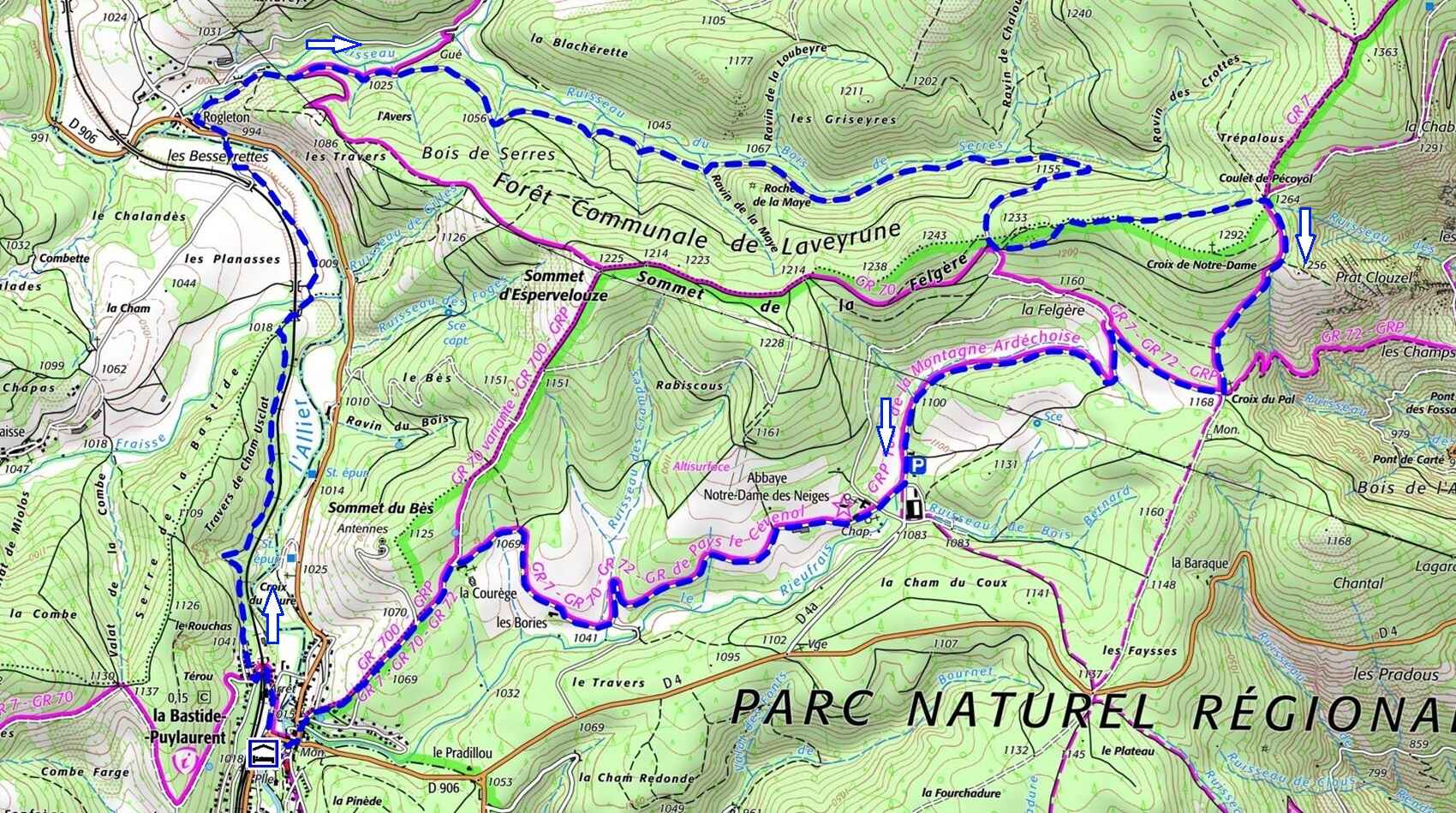

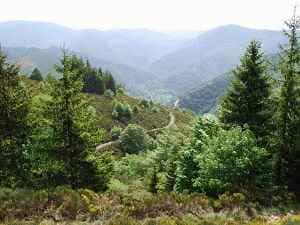
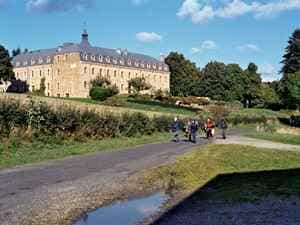
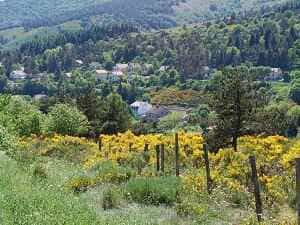
 Distance : 15.5 km
Maximum elevation : 1,264 m | Minimum elevation : 995 m
Total elevation gain : 321 m
IGN Maps : La Bastide-Puylaurent (2738E) / Largentière La Bastide-Puylaurent Vivarais Cévenol (2838OT).
🖨️ Print the hike instructions
The Abbey of Notre-Dame-des-Neiges, located in Saint-Laurent-les-Bains-Laval-d'Aurelle in Ardèche, is a place of peace and spirituality. Founded in 1850 by Trappist monks from the Abbey of Aiguebelle, for over 170 years, the abbey served as a centre of spiritual life and manual work for Trappist monks. Seeking a place of solitude and prayer, the monks found the Ardèche mountains to be an ideal setting for their monastic life. In 2022, following a decline in the number of monks, the community was succeeded by Cistercian sisters from the Abbey of Boulaur. These sisters continue the tradition of prayer and hospitality, ensuring the continuity of monastic life there. Situated at an altitude of 1,100 metres, the abbey offers panoramic views of the surrounding mountains. The abbey gardens, carefully maintained by the sisters, are a haven of peace where visitors can stroll and meditate. The natural environment around the abbey is rich in biodiversity, with forests, meadows and rivers adding to the serenity of the place. Monastic life at the abbey is punctuated by religious services open to the public. The sisters devote themselves to prayer, manual work and welcoming visitors. They also produce artisanal products — jams, herbal teas and body care products — sold to support the community. The abbey hosts spiritual retreats, allowing visitors to recharge in a peaceful and contemplative setting.
In September 1878, while travelling through the Cévennes accompanied by his faithful donkey Modestine, the Scottish writer Robert Louis Stevenson was captivated by the majestic silhouette of the Notre-Dame-des-Neiges abbey. Intrigued, he decided to enter this isolated monastery for an encounter that would forever mark his journey. To his great surprise, Stevenson was welcomed with a warmth and simplicity that contrasted with the austerity of the place. The Trappist monks offered him hospitality with sincere kindness. Stevenson was given room and board, and he was quickly integrated into the peaceful life of the monastic community. Immersed in the heart of monastic life, he was fascinated by the rigour and discipline that reigned within the abbey. He observed with wonder the regular prayers, the manual work of the monks and the soothing silence that enveloped the place. At the same time, he discovered the splendour of the surrounding landscapes, wild and grandiose, which stimulated his imagination. Inspired by his stay at the abbey, Stevenson wrote a poignant account titled Travels with a Donkey in the Cévennes.
Charles de Foucauld at Notre-Dame-des-Neiges abbey: a decisive spiritual step
In 1889, Charles de Foucauld, a young French aristocrat in search of meaning and spirituality, entered the Notre-Dame-des-Neiges abbey to embrace monastic life under the name of Brother Marie-Alberic. This moment marked the beginning of a deeply spiritual journey that would significantly influence his life and work. Coming from a wealthy family and having led a worldly life, he felt an urgent need to find deeper meaning. His encounter with spirituality drew him towards a life of simplicity and contemplation. The Notre-Dame-des-Neiges abbey became for him a refuge where he sought answers to his most intimate questions. Embracing the Trappist community meant adopting an austere and disciplined way of life: days punctuated by liturgical prayers, manual work and silence, offering an environment conducive to meditation and contemplation.