


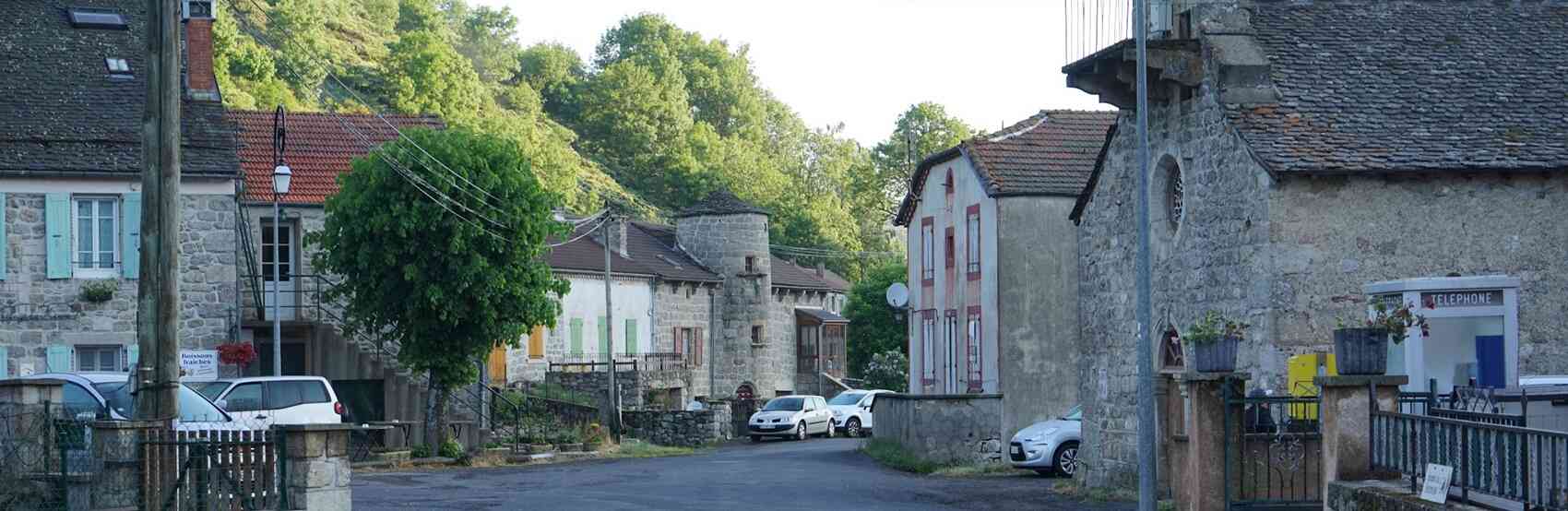
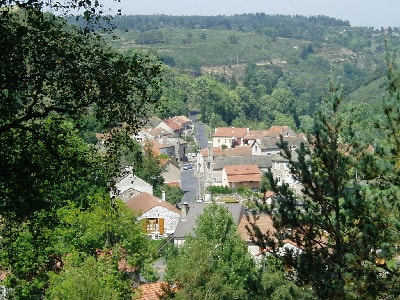
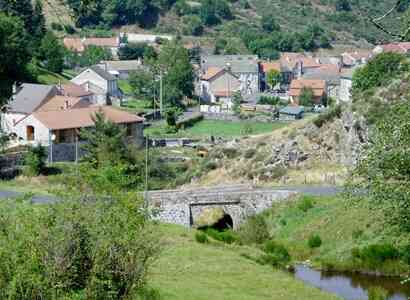
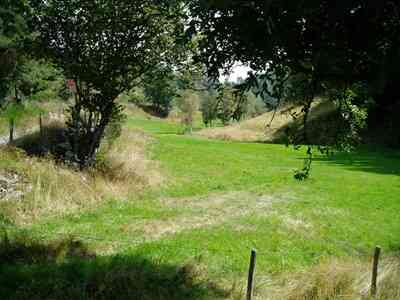
The municipality of Cheylard-l'Evêque was officially established in 1888 after separating from Chaudeyrac. Nestled in a beautifully preserved small valley where it is easy to imagine the traditional way of life of Lozère's past inhabitants, Cheylard-l'Evêque offers all the tranquil charm of a secluded paradise.
The name Cheylard-l'Évêque derives from an ancient Occitan term meaning "fortified house" or "farm on a promontory", which is closely linked to a similar word designating a redoubt or small fortress. Locally, the inhabitants simply refer to it as "Le Cheylard". The addition of the word "Évêque" stems from the village's acquisition by Guillaume VI, the Bishop of Mende, who purchased it from the powerful Lord of Randon in 1321. The dense forest surrounding the village played a crucial role in its development. Initially established high on a rocky promontory, the village eventually moved down to the foot of the rock during the 19th century.
Winters are harsh in Cheylard, and the narrow roads are frequently blocked by heavy snow. During these long, snowy months, the residents firmly support one another—whether it is to do grocery shopping, fetch fresh bread, collect the mail, or clear the roads. The vast state-owned Mercoire forest provides all the firewood the residents need to stay warm. In September and October, everyone heads out to forage for mushrooms: porcini, saffron milk caps, chanterelles, and hedgehog mushrooms. Many tourists travel specifically from the Gard and Haute-Loire regions to partake in this seasonal tradition. The Langouyrou river, which flows down toward Langogne, also offers excellent trout fishing. It is truly a small village outside of time.
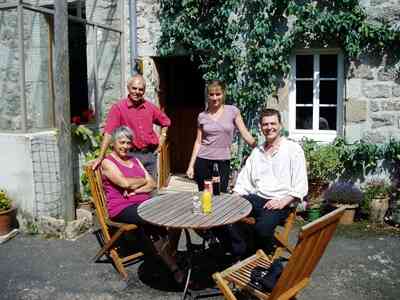
A cozy small bistro located on the village square is run by Josette and Alain. Josette manages the service with a warm, relaxed, and friendly demeanor, while Alain, a retired forest ranger, passionately tends to the terrace flowers, handles the firewood, and forages for mushrooms in the surrounding hills.
I often find myself stopping by to say hello on my way back from Langogne. It is always a genuine and incredibly warm welcome! Alain knows the area intimately, including the countless hiking paths winding through the Mercoire forest and the Moure de la Gardille. It is there that one can hike to the very sources of the Allier and Chassezac rivers, standing exactly on the watershed line that separates the waters flowing to the Mediterranean Sea from those heading to the Atlantic Ocean.
Hikers arriving from large, bustling cities are instantly transported back to the era of Robert Louis Stevenson, who famously stopped at this very village. "I set out for Cheylard-l'Évêque, situated at the edge of the Mercoire Forest," wrote Stevenson in his Travels with a Donkey in the Cévennes. "I had been told that a man could walk this distance in an hour and a half, and it did not seem too ambitious to imagine that a man burdened with a donkey could cover the distance in four hours. Throughout the ascent to Langogne, rain and hail succeeded one another; fast-moving clouds—some bringing curtains of heavy showers, others forming luminous masses as if to announce snow—whipped in from the north and followed me on my path. The wind cooled steadily but slowly. I soon found myself outside the cultivated basin of the Allier, far removed from the work oxen and other familiar rural scenes."
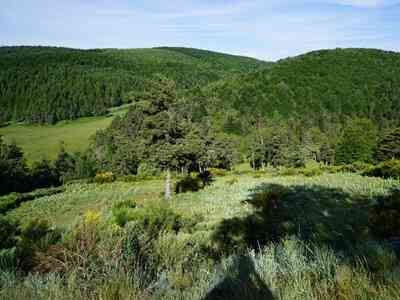
The Mercoire forest is a vast, ancient woodland area teeming with biodiversity. Its majestic trees, predominantly oaks, beeches, and tall firs, stretch for miles, creating an enchanting and somewhat mysterious landscape. The air is incredibly pure, and the song of birds resonates deeply throughout the underbrush. Hikers can explore a network of well-marked trails that wind through the forest, offering glimpses of the local fauna—graceful deer, wild boars, elusive foxes, and a variety of migratory birds. It is a place where one can happily get lost, listen intently to nature, and allow oneself to be fully enveloped by the surrounding serenity.
Near the forest lies the Abbey of Mercoire, a historic stone building rich with the echoes of the past. Founded in the 12th century, it served for hundreds of years as a place of quiet prayer and deep devotion for the nuns of that era. Its robust stone construction exudes rustic charm, and its architecture beautifully reflects early Romanesque influences. Although the abbey is no longer inhabited by religious orders, it remains a profound symbol of spirituality and peace.
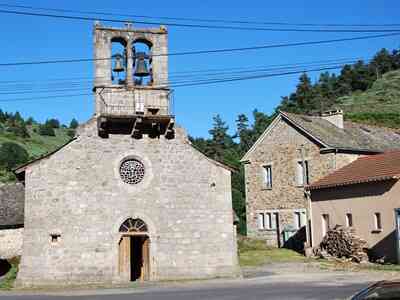
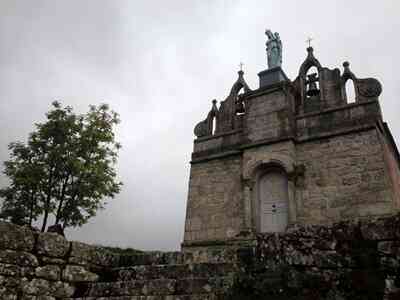
At the very top of the rock stands a chapel dedicated to Notre-Dame de toutes les Grâces (Our Lady of All Graces), offering a sweeping panoramic view of the village and the endless surrounding forest. It is a small, quiet jewel that breathes history and spirituality. While not as famous as the grand cathedrals, it possesses a unique charm and a soothing atmosphere that draws both the curious and the faithful. Erected in 1862, it was built at a time when Catholic devotion was highly prominent in the region. The parish church in the village below is also quite remarkable, as its bell tower originally belonged to the Abbey of Dames de Mercoire and dates all the way back to the 12th century.
The chapel has long served as a vital gathering place for the inhabitants, particularly during significant religious festivals. Its architectural style directly reflects local influences, utilizing stones and materials sourced from the immediate vicinity. If you look closely, you can admire the intricate details that make it such a unique place. The interior is often simple yet deeply touching, with modest elements decorating the altar and the bare stone walls. Traditional religious works, such as carved crucifixes and wooden statues of saints, tell enduring stories of local faith and devotion.
Terror in Gévaudan
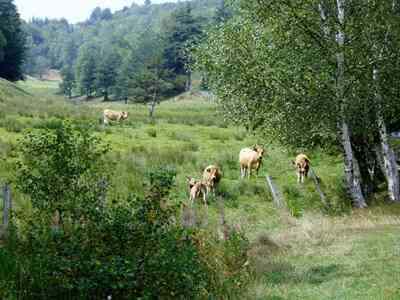
In June 1764, near Langogne, along the banks of the Allier River—in what would eventually become the Lozère department—a late spring was attempting to erase the lingering frost of winter. In this notoriously harsh land of Gévaudan, the finally generous sun had regenerated the lush grass of the communal meadow, situated not far from the village.
That morning, a woman tending her cows led her modest herd out to pasture. The cows followed her without requiring much encouragement: the dogs barked playfully, and all seemed well. However, around midday, while the woman was eating her lunch, she noticed a sudden, intense nervousness among her dogs. "Another fox," she thought. "Or maybe wolves? No, wolves wouldn't dare venture this close..." Yet, the warning growls grew louder and more frantic. Vaguely worried, the cowherd decided it was best to gather her herd and leave.
From then on, everything happened very quickly. The unfortunate woman didn't even have time to see her dogs flee in terror, their tails tucked between their legs; she was suddenly assaulted, thrown violently to the ground by the brutal, overwhelming force of a massive predator. Against all odds, however, it was her cows that saved her. Perhaps believing their young calves were in immediate danger, the horned beasts boldly charged at the fanged creature. Without putting up much of a fight, the beast abandoned its prey and disappeared back into the thicket!
This provided a precious piece of testimony: that evening, the cowherd from Langogne personally informed the very first investigators of the case. "The beast that attacked me looks like a big wolf, but it is not one. Its head is much larger and more elongated. It is reddish and features a dark black stripe running the entire length of its back. It didn't seek to attack the cattle at all; it was me it wanted to devour!" Some locals shivered as the peculiar portrait of the attacker was repeated from home to home. What kind of demonic animal could this be? "The farmer must have come across an unusually large wolf, and her terrified imagination wove the rest"—such was the common opinion. Nonetheless, they remained highly vigilant, and many began to wonder who, in case of dire need, could possibly come to the aid of the inhabitants of such an isolated, wild land, riddled with sharp granite outcrops and thick, dark forests. Faced with what they soon dubbed the "creature of the devil," the peasants had only their faith and their raw courage.
Shortly thereafter, in the nearby hamlet of Ubas, farmers discovered the corpse of fourteen-year-old Jeanne Boulet. She had been partially devoured. The local parish priest somberly noted in his register, as a final prayer: "Buried without sacrament, killed by the fierce beast." Notably, he no longer spoke of a mere wolf. Later that summer, on August 8, the beast attacked a small shepherdess from Masméjan d'Allier. Lumberjacks working on the opposite hill suddenly noticed the sheep running frantically down the slope—entirely alone. Curious and alarmed, they crossed the valley and discovered the unthinkable: the poor shepherdess's body had been hideously mutilated.
This time, the local population was completely outraged. Their anger doubled when, barely two weeks later, a fifteen-year-old boy—also a cowherd—was torn to pieces near Cheylard-l'Evêque. Now, tongues truly began to loosen. It became terrifyingly clear that these three victims were not the first; there had been others as early as March and April. It was time to act. But how? The men organized large hunts, but to absolutely no avail.
On September 1, another fifteen-year-old boy was slaughtered near Chaudeyrac. Fourteen years old, fifteen years old... The beast seemed to distinctly prefer young, tender prey. However, on September 6, it broke this pattern by attacking a mature woman, a farmer working peacefully in her vegetable garden in the hamlet of Estrets. It leapt directly at her throat, bleeding her dry within minutes. Villagers, alerted by her desperate screams, rushed to her aid—but they were too late. The poor woman succumbed to her massive injuries. This time, the animal had attacked alarmingly close to the village homes. Could it be that the creature feared nothing at all? After the initial shock and the subsequent anger, deep anxiety now fiercely gripped the local population. Hunts were doubled, and urgent messages were sent to the regional authorities: this carnage had to stop!
To calm the rising panic, the King's representative in the province agreed to dispatch a heavily armed detachment of fifty-seven dragoons to the site—essentially a small army. "All this for a single wolf?" the population wondered, sighing and shrugging their shoulders in disbelief.
However, these dozens of seasoned soldiers, despite being actively assisted by highly motivated local farmers, beat and re-beat the dense woods, scouted the thickets, and aggressively raked the valleys. Nothing worked. The beast remained entirely unfound—until it made bloody headlines once again, this time on the Margeride side. On September 20, there was a sudden twist of fate: young shepherds, stationed in the meadows between Le Luc and Cheylard-l'Evêque, saw their dogs run aggressively toward the edge of a wood and leap onto a large predator—an incredibly impressive wolf. The brave young men rushed to help their dogs, managing to kill the beast and proudly drag its carcass back to the priest of Luc. There was absolutely no doubt in their minds: they had finally killed the Beast.
False joy! Just six days later, a thirteen-year-old girl was gruesomely slaughtered. The hunts, chases, and intense tracking efforts multiplied, mobilizing more and more men—yet it all remained in vain! Each passing week would now bring its horrific share of mangled bodies—mostly those of young girls and teenagers—sometimes discovering trunks without heads, opened entrails, and scattered limbs. Frantic reports piled up at the province intendant's office, clearly overwhelmed by such unprecedented carnage. Around him, officials began to quietly wonder: what if it wasn't a wolf at all? After all, it could be a rogue bear... or perhaps an abnormally large lynx.
By Christmas 1764, the Bishop of Mende himself ascended the pulpit and sternly admonished his faithful. According to him, the beast directly embodied the vengeful arm of God, sent to severely punish a population that had wallowed far too long in sin. The prelate called for general penance and a massive resurgence of daily prayers. In his thundering sermons, the beast had become the exterminating angel—God's ultimate scourge—whose terrifying aggressions deeply fascinated an increasingly populous society now highly prone to all sorts of dark fantasies. For two full months, the holy sacrament remained exposed on the altars of churches to protect the scattered parishes. But God seemed deaf to the desperate pleas of all those peasants who felt completely abandoned to their grim fate. Refusing to wait for a miracle, they actively organized themselves, equipping their men with long spears and sharpened sickles, marching tightly together whenever they crossed the hills, while the terrified shepherds attempted to group their flocks whenever possible.