


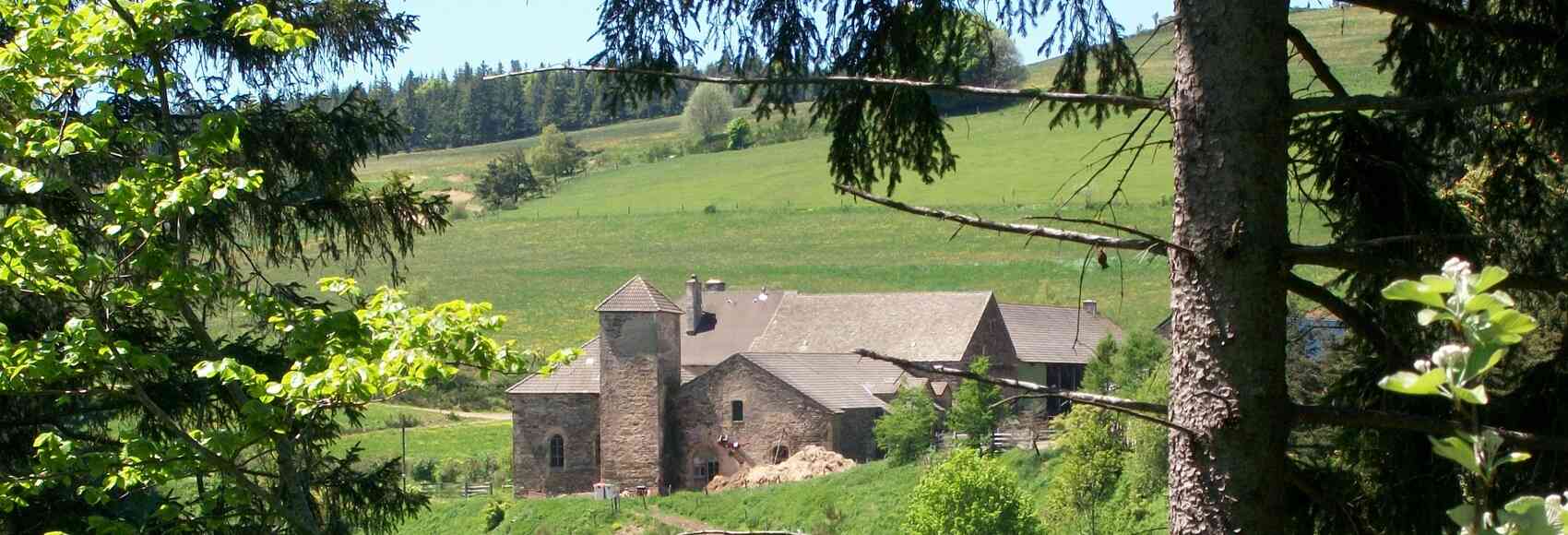
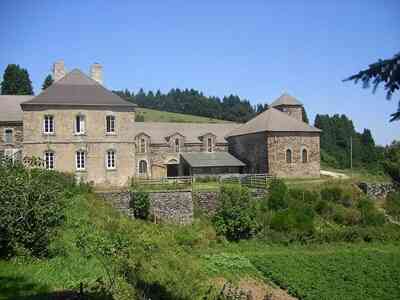
Although the exact foundation date of this monastery remains unknown, historical texts confirm its existence as early as 1207. The Abbey of Mercoire owned one-sixth of the 10,000-hectare Mercoire forest—vast lands granted to it in the 12th century by Guillaume de Randon. To sustain itself, the abbey also owned estates across Vivarais, Velay, and Gévaudan, which provided it with a steady supply of wheat, rye, poultry, butter, cheese, wine, oil, and chestnuts.
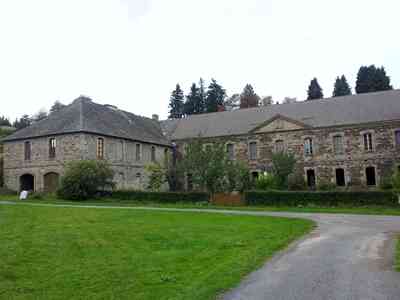
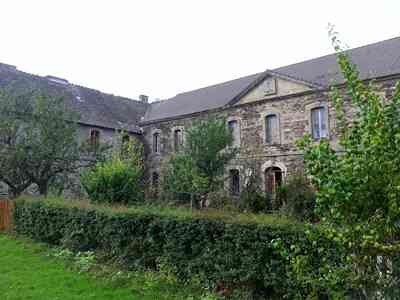
By the late 13th century, the convent housed 50 nuns and 15 "damoiselles"—novices or young noble daughters raised within its walls. Their numbers would dwindle to around fifteen by the 15th century, and to a mere seven by the time of the French Revolution. Its remote location could not protect the abbey from devastation, beginning with a fierce attack by Captain Merle's Huguenot forces in 1578. In 1773, a disastrous fire destroyed the entire monastery, sparing only the church and the chapel. Significant donations subsequently allowed for the construction of new buildings, but twenty years later, the abbey and its sprawling domain were seized, sold as national property, and eventually converted into a working farm around 1875.
Certain documents concerning this royal abbey in Gévaudan, within the diocese of Mende, allow us to briefly trace its six-century-old history. Founded in 1207 deep within the Cévennes mountains—in a much harsher environment than that of Saint-Antoine—the Abbey of Mercoire enjoyed a highly prosperous beginning. However, by the end of the 15th century, brutal wars, fires, widespread looting, and the unforgiving climate had severely reduced the community. Periods of profound discouragement were followed by strong recoveries. At the dawn of the French Revolution, only seven nuns remained, two of whom were temporarily absent.
On August 11, 1790, commissioners from the Langogne district arrived to inventory the movable property and titles of the monastery. The abbey's various sources of income totaled 9,781 livres and 4 sous, with no recorded mention of expenses. Once the inventory was complete, the nuns were questioned individually. They were asked to declare "whether they intended to live in their house under the vows they had taken, or if they wished to take advantage of the freedom the law now offered them." Their recorded responses were unanimous. Madame de Treilles, the abbess, alongside the four other nuns present, declared: "We wish to live and die in this community, if it may continue under the vows we have taken." Two sisters, Françoise and Rosalie du Fayet de Chabannes, were among the resolute women present.
On November 11, 1790, one of the absent nuns, thirty-year-old Marie-Anne de Vergèses du Mazel, wrote to the Langogne district to declare her unwavering intention to live and die in the religious state she had embraced. "I always consider myself," she wrote, "as a member of the house of Mercoire. I only left the abbey on November 19, 1789, with the explicit permission of my superiors." The other absent nun, Anne de La Tour de Clamouse, stated that she had left Mercoire "with permission from the superiors and upon the strict orders of her doctor... to seek the necessary remedies for her failing health" (January 25, 1791).
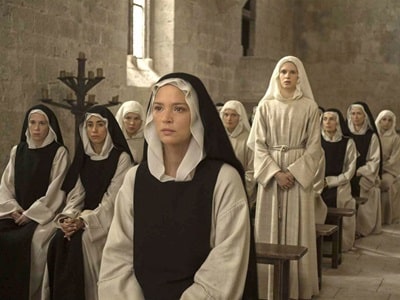
The directory of the Langogne district was in no hurry to disburse the pensions planned for the nuns of Mercoire. No longer receiving their rightful income, the women lived in a state of poverty bordering on misery, yet they never issued a single complaint. However, public rumors eventually alerted the departmental administration to their deep distress. On July 14, 1791, the magistrates deliberated and granted an emergency provision of 1,800 livres. On August 6, they officially set the abbess's pension at 1,500 livres and that of the nuns at 700 livres, payable quarterly by the district treasurer.
All the nuns were still residing at Mercoire on July 15, 1792, when a search was abruptly conducted following a denunciation by a "patriot" from Langogne, who had labeled the abbey a den of dangerous counter-revolutionaries. The investigator, however, found only "the ladies and their servants," and absolutely no weapons. Consequently, he left the house at their peaceful disposal. But this peace would not last: by December 29, 1792, the nuns were gone, forced out in accordance with the strict laws passed in August of the previous year.

In the 12th century, the Abbey of Mercoire was a sanctuary of peace and devotion. It housed dedicated nuns and "damoiselles"—young girls of noble birth sent to the abbey to be educated or to await their arranged marriages. The abbey was generously supported by Guillaume de Randon, a powerful lord of Gévaudan who had donated part of the Mercoire forest to the sisters. He was also a renowned protector of troubadours, those wandering poets and musicians who famously sang of courtly love.
Among the young damoiselles at the abbey was Héloïse, the daughter of the Count of Rodez, who had been promised to the Baron of Sévérac. Héloïse was a remarkably beautiful and intelligent young woman, but she held no love for the baron, whom she found old and harsh. She dreamed of a different fate—one filled with freedom and romance. She adored listening to the troubadours' songs, as they frequently visited the abbey to entertain the nuns and the damoiselles.
One day, a young, handsome troubadour named Bérenger arrived at the abbey. With his golden hair and incredibly melodious voice, he enchanted the entire hall. He sang passionate verses in honor of a mysterious lady he affectionately called his "thornless rose." Héloïse was captivated by his songs, wondering who this deeply loved lady could be. As she began to observe Bérenger more closely, she noticed that he often looked at her with striking tenderness. She quickly realized that *she* was his thornless rose, and her heart was deeply moved.
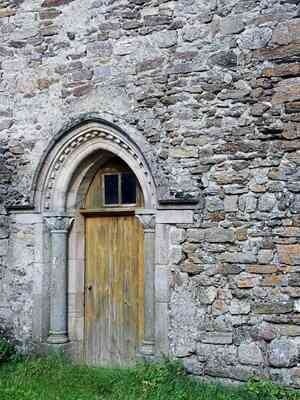
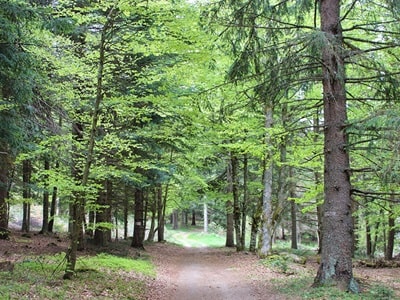
She began speaking with him, and they soon discovered an undeniable affinity. They shared a profound love for poetry, music, and the natural world. They would walk together through the dense forest of Mercoire, admiring the ancient trees, wild flowers, and woodland creatures. They shared their wildest dreams, their deepest hopes, and their hidden fears. They confided their secrets, joys, and sorrows. They smiled at each other, gently touched, and eventually shared a forbidden kiss. They had fallen deeply in love.
But their romance was strictly forbidden. Héloïse was formally engaged to the Baron of Sévérac, while Bérenger was merely a simple troubadour, possessing neither wealth nor rank. They knew they could never marry or live freely together. They knew they would inevitably have to part. They understood the terrible risks they took—defying the wrath of their powerful families and the stern disapproval of the Church. Yet, they refused to give up their fleeting happiness, choosing instead to seize every stolen moment.
They would secretly meet at night in the abbey's darkened chapel, hiding beneath the heavy stone altar. There, they swore oaths of eternal devotion and prayed to God to protect them. They exchanged small tokens of love and discreetly carved their intertwined names into the ancient walls. In the quiet shadows, they made love and forgot the outside world entirely.
Tragically, their secret was uncovered by a jealous nun who caught them one evening in the chapel. She immediately denounced them to the abbess, who was horrified by the scandal. The abbess swiftly summoned the Count of Rodez, Héloïse's father, and the Baron of Sévérac, her furious fiancé. She revealed everything, presenting undeniable proof of Héloïse and Bérenger's transgression.
The Count of Rodez and the Baron of Sévérac were blinded by rage and swore terrible vengeance. They had Bérenger brutally arrested and swiftly condemned him to death. They imprisoned a weeping Héloïse and forced her into an immediate marriage with the baron. They burned every parchment of Bérenger's beautiful songs and violently scraped their carved names from the chapel walls. They did everything in their vast power to completely erase their love.
Yet, their cruel efforts were ultimately in vain. Héloïse and Bérenger's love was unbreakable, and they never renounced their bond. Before his execution, Bérenger sang one last, heartbreaking song for his thornless rose, bidding her a final farewell. Before her forced marriage, Héloïse managed to write one last letter to her troubadour, professing her eternal love. They cherished their precious memories, holding onto the pure hope of being reunited in paradise.
The Abbey of Mercoire grew somber and dark after this devastating drama. The nuns and damoiselles wept secretly for Héloïse and Bérenger, mourning their tragic love. They quietly prayed for their souls and paid them a silent tribute. They placed a simple wooden cross over Bérenger's unmarked grave and gently laid wild roses upon it. They even composed a melancholic song recounting the true story of Héloïse and Bérenger, whispering it to one another every spring.