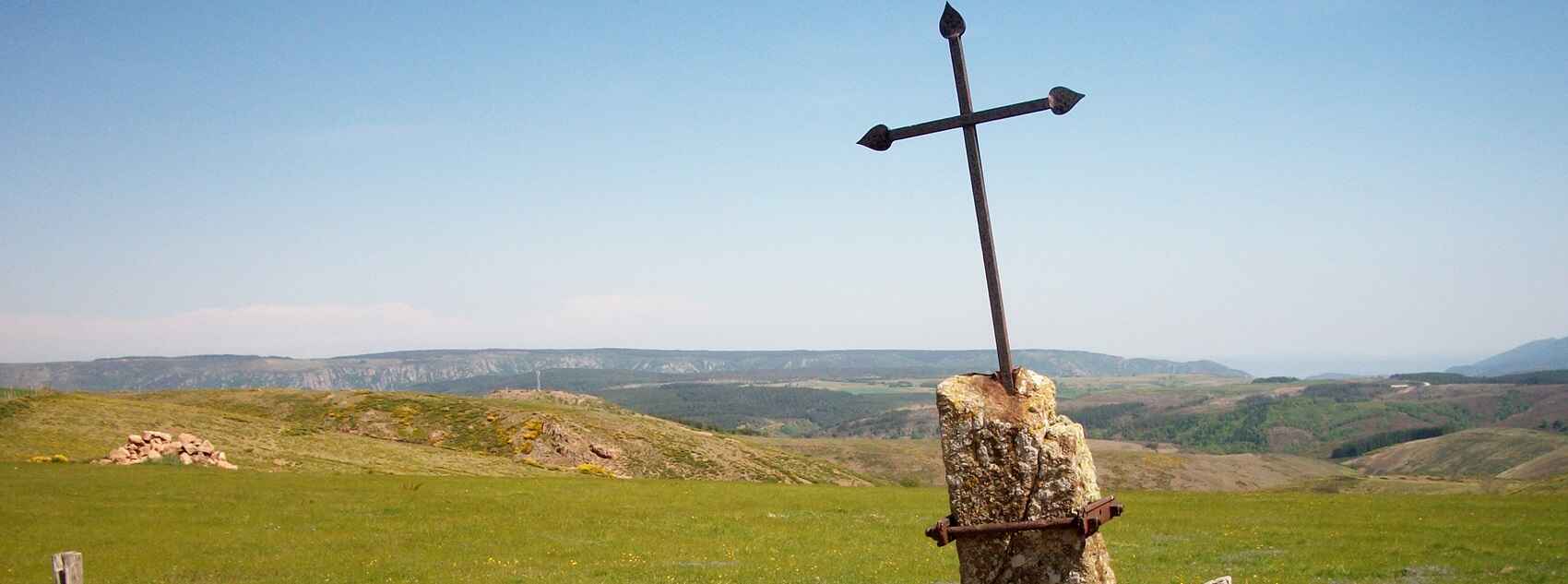
The medieval history of Villefort is deeply rooted in the rugged landscape of the Cévennes mountains, at the strategic crossroads of three ancient provinces. From the twelfth century onward, the town developed under the influence of the powerful barony of La Garde-Guérin, which controlled the surrounding area. The town's destiny is inextricably linked to the Regordane Way, a vital communication route connecting the Massif Central to the Mediterranean coast. Thanks to the constant flow of pilgrims and merchants, Villefort became a flourishing center of commerce with renowned fairs. The architecture of the old town center still bears the marks of this era, with its narrow houses and covered passageways. In the fourteenth century, the town had to strengthen its defenses to protect itself from the bands of mercenaries who were then ravaging the Gévaudan region. The presence of the royal administration gradually became more established, making the town a legal and fiscal stronghold for the king. Religious orders also played a major role in social organization and in welcoming travelers exhausted from crossing the mountains. Despite feudal conflicts and epidemics, the medieval urban structure managed to maintain itself thanks to the wealth generated by transit.
 Origins and the castle
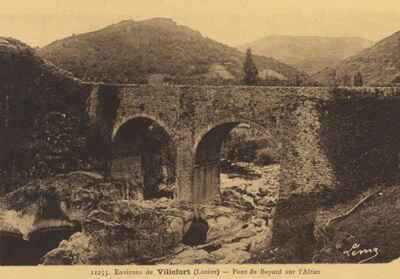
In the folds of time, where history whispers through the stones, stands Villefort, or Villa Montisfortis, a glimpse of medieval times nestled in the beating heart of Lozère. Once, its lands echoed with the sounds of a Roman agricultural estate, now lost in the mists of history. A proud and majestic castle dominated the village, like a stone guardian overlooking the Regordane Way.
 The Regordane Way
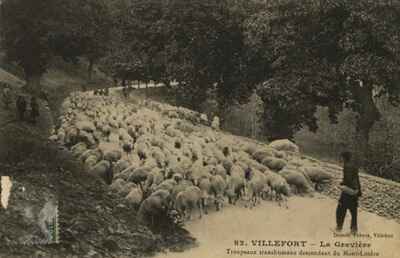
Imagine a path, more than just a simple road, a vital artery that, in the Middle Ages, wove a link between Bas-Languedoc and Auvergne. It winds, sinuous, through hills and valleys, carrying stories, life, and commerce. The muleteers, these timeless travelers, danced with their steps, transporting oil, wine, and salt, essentials of daily life. The pilgrims, souls in search of faith and redemption, walked towards Saint-Gilles, leaving behind prayers and hopes.
Fate, capricious, abandoned the Regordane Way in the 14th century, preferring the waters of the port of Marseille and the fairs of Lyon. Yet the marks of its glorious past remain, etched in stone: wheel ruts, silent witnesses to the incessant ballet of carts, are still visible, indelible scars between Thort and Molette, and near Saint-André-Capcèze. These traces are the tale of a bygone era, a tangible link to our ancestors, a reminder that, although empires crumble and eras succeed one another, some testimonies of the past remain, eternal and unchangeable. In 1668, Froidour, the emissary of Colbert, traveled the Regordane Way, this commercial and spiritual vein that pulsed between Alès and Langogne. Villefort, like a beating heart, was at the crossroads of paths, a nerve point where destinies crossed.
 The tumults of history
In the heart of Lozère, Villefort stands, a silent witness to the tumults of history. In its streets, the echoes of religious wars still resonate, recalling the siege of 1629 by Henri de Rohan. La Bourgade street, once ablaze with Huguenot fervor, bears the scars of the sacred fire. The walls that once encircled the village in the 17th century succumbed to the weight of years, their gates collapsing between 1808 and 1813, as if to open a new era.
The Revolution left its marks, with battered coats of arms, symbols of the revolt against the Old Regime. On Place du Portalet, a cross stands, memorial of Abbé Hilaire, a refractory priest executed in 1794. The Great War took many sons of Villefort, their names engraved in the stone of the monument on Place du Bosquet. The population, reduced by 15%, testifies to the deep scar left by the conflict. Villefort, the birthplace of Odilon Barrot, a distinguished statesman and scholar, flourishes at the crossroads of worlds: where the schistose Cévennes embrace the granite plateaus, where the limestone of the Vauzéen region tells its millennia-old stories. Until the Revolution, it shared its fate with the Diocese of Uzès, but its soul has always danced to the rhythm of Gévaudan.
 Economic and railway evolution
Situated at 605 m above sea level, the village developed along the Regordane Way into a single street, constituted by the current Rue de l'Église and Rue de la Bourgade. At a time when the wheels of carts could not tread the Regordane, mules were the vessels of commerce, carrying on their backs the wine of the Vivarais and the hopes of men. In 1812, two hundred of these faithful companions crossed Villefort daily, silent witnesses of a bygone era.
When Vialas, filled with argentiferous lead, offered its entrails to the light, it was in Villefort that the precious ore found its way to a foundry buzzing with life and activity. More than two hundred souls worked there in 1813, before the industrial breath transported the foundry to Vialas itself in 1827, marking the end of one chapter and the beginning of another in the woven history of Villefort.
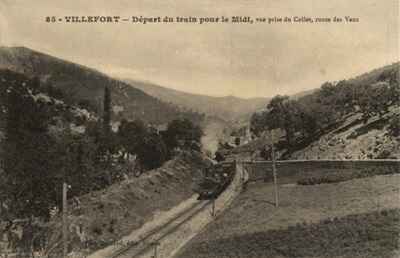
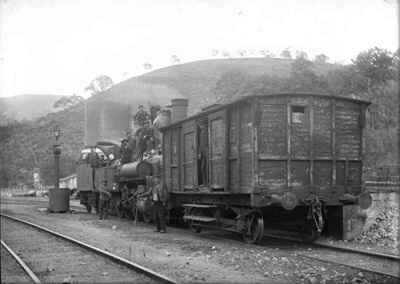 Starting in 1865, the P.L.M. (Paris-Lyon-Marseille) company established the line that is now used by the train Le Cévenol, connecting Clermont-Ferrand to Marseille via Alès and Nîmes. Breaking the town's isolation, it proved to be a major asset for the Lozère towns located on its route. New professions emerged, such as P.L.M. employees during the construction of the line or shippers of local products like the chestnut from the Borne valley. However, the disappearance of mule caravans dealt a blow to economic activity, particularly for artisans and innkeepers.
 The chestnut and the Resistance
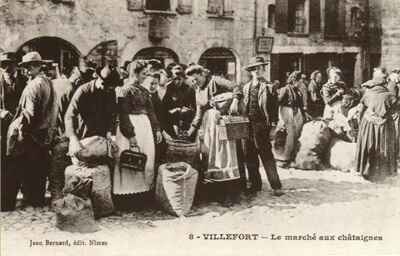
At the dusk of the 19th century, Villefort awakens under the benevolent reign of the chestnut, this queen of the Cévennes that nourishes men and beasts with its abundant fruits. Chestnut cultivation, woven into the daily life of the inhabitants, dictates the rhythm of the seasons with its ancestral cycle. At the hour when the sun sets, the gatherers come together, celebrating the harvest in the ritual of the brousillade (traditional roasted chestnuts), where the chestnuts dance over the embers, exhaling their woody fragrance into the falling night.
Time, the eternal sculptor, constantly reshapes the landscape. The chestnut groves, once the pride of the region, are abandoned or sacrificed for tannin extraction. Ruthless diseases, such as ink and endothia, torment the trees, condemning them to silence. But hope, like a phoenix, rises from its ashes. A new era is emerging, driven by the quest for excellence and the recognition of the Protected Designation of Origin. Chestnut producers, sentinels of this heritage, engage in a rebirth, forging a future where the chestnut will regain its former splendor. During World War II, Villefort, under German occupation, became the cradle of fierce resistance. The maquisards, elusive shadows of the mountains, fought tirelessly for the freedom of their land.
 Heritage and traditions
Craftsmanship, a precious heritage of the Middle Ages, flourished until the dawn of the industrial era. The exploitation of lead ore offered an alternative to agricultural lands, and a foundry rose, a symbol of emerging progress. But the 20th century saw rural exodus, sweeping away the essence of traditional trades.
Rue de Rome leads to the Saint-Jean chapel, or Gleisetto, a sanctuary for pilgrims in days of old. Further north, the Saint-Loup-and-Saint-Roch chapel watches over the lake, a place of pilgrimage and devotion, where souls seeking protection still invoke Saints Loup and Roch. The granite washhouse, with its twin basins, evokes the echoes of washerwomen, their songs and sorrows mingling with the murmur of water. The Saint-Jean bridge, with its slender arches, crosses the river Palhères, a silent witness to bygone eras.
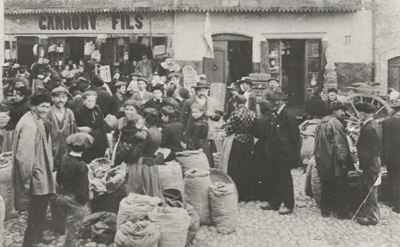
The Villefort market, established since 1511, remains a place of life and exchange. The fairs, once flourishing, attracted crowds, and today, flea markets and craft markets continue to beat with the heart of the town. Villefort, with its historically rich alleys and centuries-old buildings, is a living collection of the past, a space where every stone whispers a legend, a timeless place where the tales of yesteryear are still whispered in our ears.