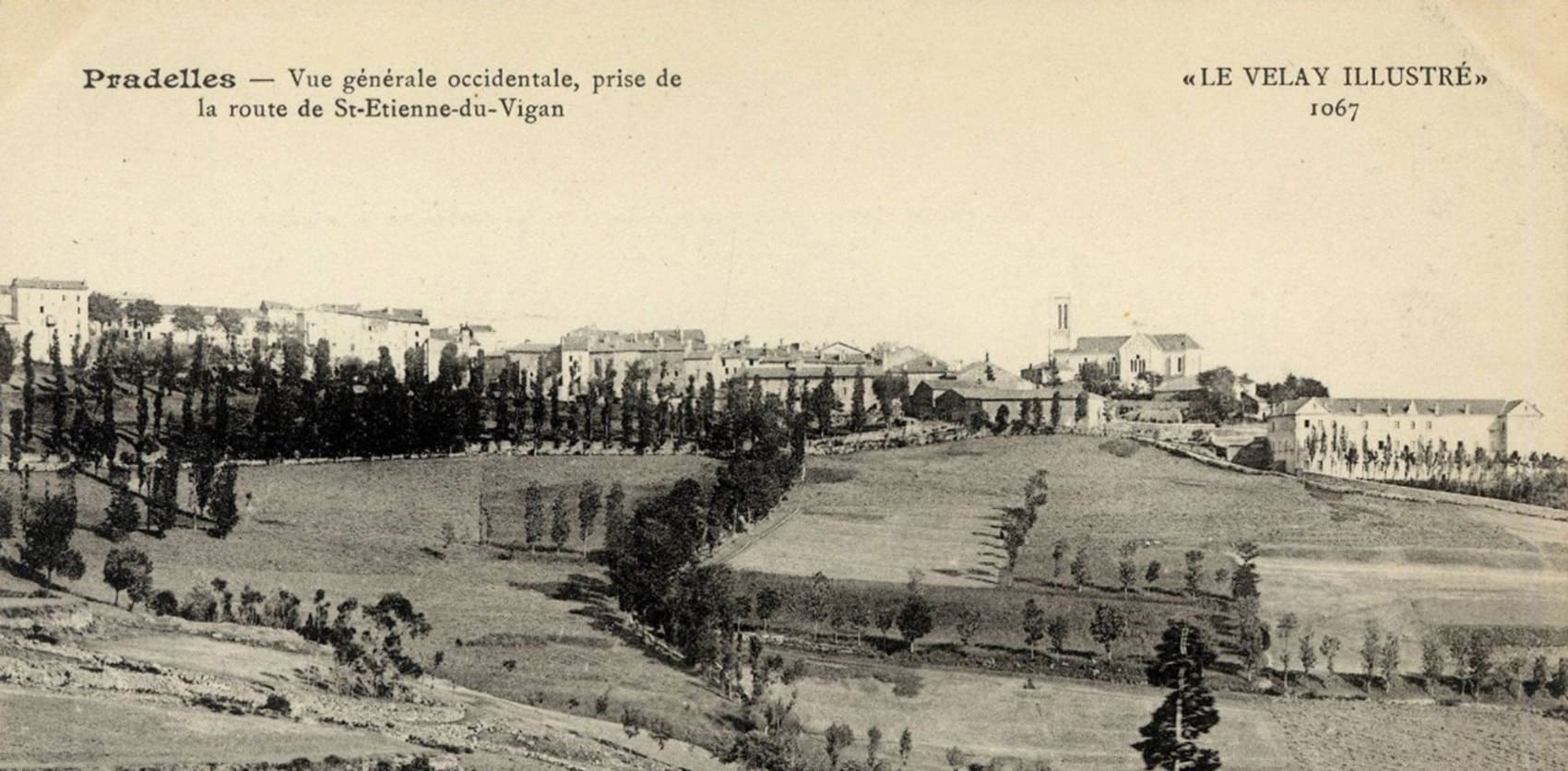
Robert Louis Stevenson arrived in Pradelles on the evening of September 25, 1878, marking an important milestone in his journey through the Cévennes, which he undertook with his donkey Modestine. The village, perched in Haute-Loire, appeared to him as a place of rest after a demanding day of walking. He spent the night there, finding accommodation for himself and his donkey. In his writings, he describes Pradelles with a certain charm, highlighting the atmosphere and characteristics of this medieval town. It was also in Pradelles that Stevenson had to manage small logistical challenges related to Modestine, his often stubborn travel companion. His stay illustrates the reality of traveling on foot, blending the discovery of picturesque places with the daily troubles of the hiker and his burden. This stop is part of the key moments immortalized in his account, Travels with a Donkey in the Cévennes, ensuring the village's literary fame.
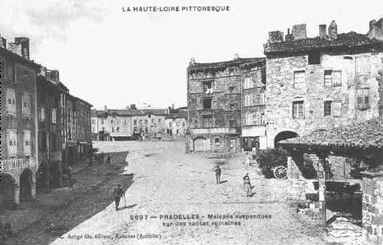 Solitude on the road to Pradelles
“It was bitterly cold and icy, and apart from a cavalcade of ladies on horseback and a couple of rural postmen, the road was one of deadly solitude all the way to Pradelles.
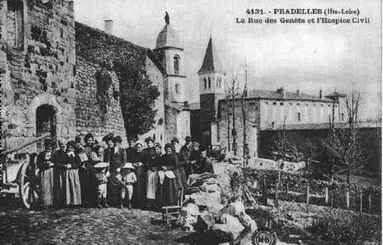 I barely remember a single incident. A lively foal, wearing a bell around its neck, dashed towards us across the entire stretch of the meadows, like a creature about to accomplish great feats, then, suddenly, its young recruit's heart changing its mind, turned around and galloped away just as it had come, its bell jingling in the wind.
For a long time afterward, I saw its noble posture as it stopped, and I heard the sound of the bell. When I reached the main road, the song of the telegraph wires seemed to continue the same melody.
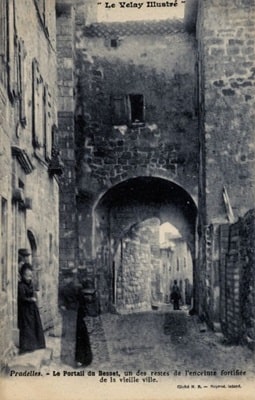
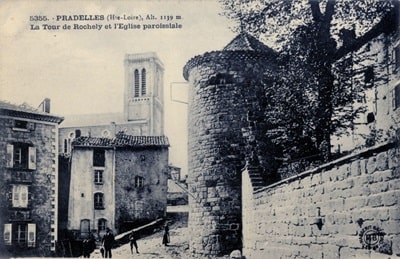
Pradelles is located on the slope of a hill overlooking the Allier, surrounded by lush meadows. The aftermath was being mowed on all sides, which gave the vicinity, on that stormy autumn morning, an unusual smell of hay. On the opposite bank of the Allier, the site continuing to rise for miles to the horizon, a faded and yellowed late-season landscape, marked by the black spots of pine woods and white roads winding among the hills above the whole, the clouds cast a uniformly purplish shadow, sad and somewhat threatening, exaggerating heights and distances and giving even more relief to the winding of the main road. The perspective was quite desolate but stimulating for a tourist. For I now found myself at the edge of the Velay, and everything I could see was situated in another region of the wild, mountainous, uncultivated Gévaudan, recently cleared of trees out of fear of wolves.
 The land of the Beast of Gévaudan
Wolves, alas! like bandits, seem to retreat before the march of travelers. One can stroll through all our comfortable Europe and never experience an adventure worthy of the name. But here, wherever one might have been otherwise, one found oneself on the borders of hope. It was, indeed, the land of the ever-memorable Beast, the Napoleon Bonaparte of wolves. What a destiny was hers. She lived ten months in free quarters in the Gévaudan and Vivarais, devouring women and children 'and shepherdesses famous for their beauty'. She pursued armed horsemen.
 She was seen, in broad daylight, chasing a post-chaise and an outrider along the King's highway, and both chaise and outrider fled before her at full gallop. She held the spotlight like a public criminal, and a bounty of ten thousand francs was put on her head. And yet, when she was killed and sent to Versailles, well! it was just an ordinary wolf, and not even one of the largest, 'although I could go from pole to pole,' sang Alexander Pope.
The little corporal shook Europe; if all wolves had resembled this wolf, they would have changed the history of humanity. Elie Berthet made him the hero of a novel that I read and have absolutely no desire to reread.
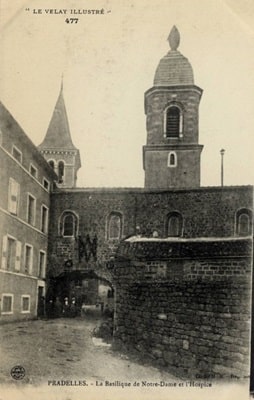
I hurried my snack and resisted the innkeeper's desire, who strongly urged me to visit Notre-Dame de Pradelles 'which performed many miracles, although she was made of wood', and, less than three-quarters of an hour later, I was prodding Modestine down the steep descent leading to Langogne on the Allier.
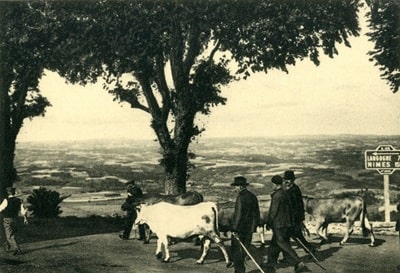
On both sides of the road, in vast dusty fields, farmers were busy preparing for the upcoming spring. Every fifty meters, a team of heavy oxen, with drooping dewlaps, patiently pulled a plow.
I saw one of these powerful and placid servants of the soil take a sudden interest in Modestine and myself. The furrow he was digging led to a corner of the road. His head was securely fastened to the yoke like that of caryatids under a heavy cornice, but he fixed his large honest eyes on us and followed us with a thoughtful gaze until his master forced him to turn the plow and began to work his way back up the field.
From all these plowshares opening the soil, from the footsteps of cattle, from every farmer who, here or there, broke the dry clods of earth with a hoe, the wind carried a light dust far away, comparable to thick smoke. It was a lively, busy, delicate rural picture, and as I continued to descend, the high lands of the Gévaudan kept rising before me into the sky.”
From "Travels with a Donkey in the Cévennes"
 The meeting of Martin and Stevenson
Once upon a time, in the lush and wild valleys that embrace the medieval town of Pradelles, there was a young cowherd named Martin. His days stretched out, peaceful but monotonous, rhythmic with the crystalline song of larks, the dull tinkling of his herd's bells, and the constant murmur of the wind sweeping across the golden gorse moors. From his rocky promontory, Martin spent hours scanning the horizon where the sky kisses the Margeride mountains. He dreamed of distant adventures, unknown lands battered by sea spray, and thrilling stories. Yet, his reality seemed immutable: his life was anchored here, a benevolent prisoner of his native land's hills, between the smell of heather and the harshness of the soil.
 One morning in late September, as a thick and icy fog still clung to the hollows of the valleys, Martin slowly led his beasts towards the high-altitude pastures. Suddenly, the peculiar sound of a heavy footstep and a hesitant hoof tore through the cottony silence. From the veil of mist emerged an unexpected silhouette, flanked by a donkey with a resigned demeanor. It was a man with a proud gait despite his fatigue, carrying a bulky sleeping bag, a worn velvet jacket, and a long walking stick. It was Robert-Louis Stevenson, the wandering writer, who had just left the inns of Pradelles to continue his journey towards Langogne, on the steep paths of the Gévaudan.
 Intrigued by this stranger with his sharp and feverish gaze, Martin halted his herd and approached timidly. The two men stopped in the shade of a Scots pine and initially exchanged simple greetings. But very quickly, the magic worked. Stevenson, with his poetic verve and a contagious enthusiasm that betrayed his childlike soul, began to recount. He spoke to the young cowherd of his distant journeys, of his nights under the stars wrapped in his canvas bag, of his writings in the making, and of his constant, visceral quest for freedom. Martin, literally captivated, drank in his every word. Through the Scotsman's gravelly voice, he saw oceans, impenetrable forests, and chance encounters take shape. In this passing man, the young shepherd saw the living embodiment of his own chimeras.
Stevenson paused for a moment. He fixed his piercing gaze on the young man's tanned face and immediately guessed the smoldering fire, that thirst for the Elsewhere that he himself knew so well. Rummaging in the deep pockets of his jacket, the writer pulled out a small notebook with blank pages, bound in supple leather weathered by the elements. He handed it to Martin. "Write," he told him with solemn gentleness. "Write your dreams, sketch your thoughts, capture the world as you see it. And one day, when the time comes, make these pages your own journey." With trembling hands, Martin took the notebook. At that precise moment, this small object of ink and paper seemed to him a treasure a thousand times more precious than gold. He thanked the stranger with a moved nod and silently promised to follow this precious advice, while Stevenson and the placid Modestine resumed their route, gradually fading into the morning mist.
The years passed on the Velay plateau. With the changing seasons, Martin's notebook filled with stories, poems, and charcoal drawings. He recorded the harsh beauty of autumn storms, the softness of spring dawns, and above all, the imaginary itineraries he promised himself to take. He became not only the vigilant guardian of his cows but also the guardian of his own dreams, nourishing his soul away from prying eyes. And then, one day, at the dawn of a new spring, herding was no longer enough. The notebook was full; Martin's heart was too. He entrusted his herd to another, tightly laced a pair of sturdy shoes, took a walking stick carved from ash wood in his hand, and loaded a bag full of hopes on his back. With his eyes turned towards the horizon, he too set out on the stony paths, following in the footsteps of Stevenson and so many other famous or anonymous travelers who, before him, had dared to turn their dreams into reality.