 Travelogue by David Collin in Lozère, on the traces of Stevenson
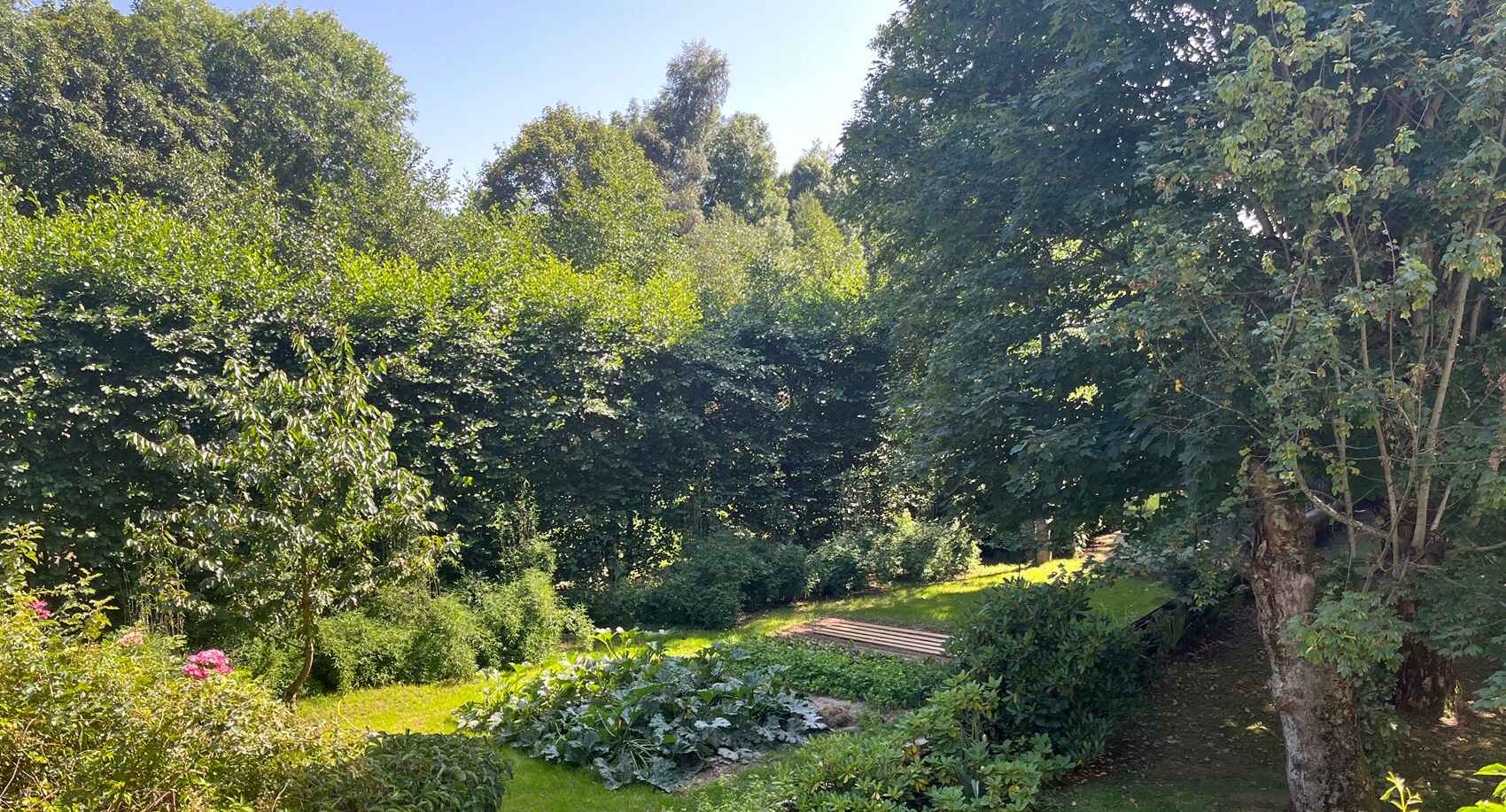
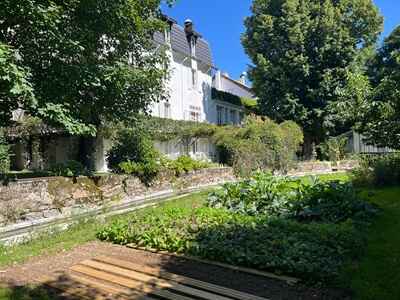
A liner! That’s how I would describe this delightful holiday home, formerly known as Hôtel Ranc or Hôtel du Parc. It sits like a docked ship, complete with gangways, a deck, crew cabins, engine rooms, and galleys built for the high seas. This white house was rescued from the depths by a generous former gold prospector: Philippe Papadimitriou. As the captain of this magnificent vessel and the master of its keys and hatches, this Greco-Belgian giant pilots, builds, and cooks. He embraces his guests so warmly that he’d gladly keep them a few days longer in Lozère.
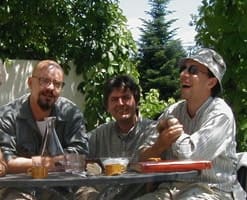 L'Étoile is a guesthouse sailing peacefully just a stone’s throw from the "great green"—vast oceans of nature navigated by Belgian or Flemish pilgrims, with whom we share tonight’s communal dining table. Here, you cannot meet someone without sharing a piece of your dreams. We are perpetually invited to the captain's table. It is an extended invitation because it marks a passage of friendship, connecting us to both the place and the people we reunite with here.
I arrived with Eric Poindron, retracing his journey through Lozère and following the footsteps of Robert Louis Stevenson and his admirable detours. These are friendly detours where people take the time to know one another, where encounters are savored and cultivated. The friendship Eric extends, and which Philippe echoes, is also a sharing of images and distant paths. We cross them before the vibrant soul of the liner—the grand hall—where the captain’s laughter and songs stretch on between courses of delicious pears.
Here, I met Sergio and heard about his adventures from the ends of the earth. With the aura of a big-hearted shaman and a master of charm, Sergio navigates the Cévennes aboard his converted truck.
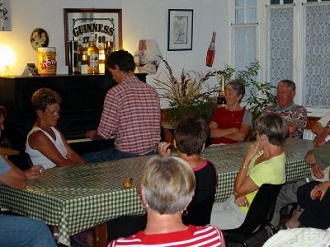
Before bringing the piano back to life, Philippe picks up his guitar—just like in the books, much like in Eric’s Belles Etoiles, where everything once written comes alive before my eyes. There is a nourishing touch of magic in this guesthouse. Following a musical fugue and the digestion of a gargantuan meal (one would return just for his gratin dauphinois, worthy of the finest tables), we step into the night and disembark into the silent forest of the monks of Notre-Dame-des-Neiges on the Ardèche side. (Realizing the pears came before the walk, I admit I’ve reversed the events. But a strict timeline hardly matters; memory wanders into the meanders of other, equally enigmatic forests, ultimately leaving us with a succession of encounters and miraculous moments.)
 We pause in the forest. Four men and a dog—Billy—listen to the silence just a short walk from L'Étoile, mere meters from the monastery where hardworking monks distill the excellent aperitif Quineige vin tonique in their cellars. Listening to the night, we evoke the Beast of Gévaudan and imagine the shadows of local ghosts lurking in the thick woods. Yet, it isn’t ghosts that keep us from sleeping at the guesthouse. Neither the monster's spirit nor the phantoms of wealthy early-20th-century families—women and children sent here so the patriarch could enjoy the Côte d'Azur in peace, sent here to do nothing but walk, listen to the murmur of the Allier River, nap in the garden, and watch the trains go by.
One could hardly dream of anything better. We, too, are tempted to extend these two short days that feel as though they began a lifetime ago. It is the grace of true encounters and friendly well-being. We must leave, but as you know, Philippe, we are doomed to return. "One always comes back to L'Étoile" is a beautiful prophecy, a sweet sentence ensuring our eventual return.
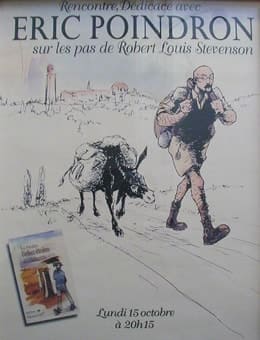 About Belles Etoiles by Eric Poindron:
Losing one’s way, or gaining the time to waste time—that is the true traveler's goal. It is a lesson perhaps unwittingly taught by a young Robert Louis Stevenson as he crossed the misty, gray-autumn landscapes of Lozère behind his donkey, Modestine.
One fine day, Eric—the peddler, pilgrim, publisher, chronicler, and writer—finally decided to follow in Stevenson’s footsteps. Well, more or less, because true encounters lie in the nuances and detours. The punishing, endless ascents and October rains were quickly offset by a magnificent series of encounters. Eric Poindron sublimates, nurtures, and revives these connections whenever he returns to the sites of his long pilgrimage. Whether facing flooded paths or uncooperative trout, nothing halts the friendly momentum of this benevolent giant. With his hearty, rugby-player build and robust walker’s stride, he loves to connect, share, and introduce people. He creates a world of friends bound by the journey, the adventure of lost or rediscovered paths (secret, but not too secret), and the joy of sharing good times around a well-stocked communal table.
Eric Poindron is on Stevenson’s trail, and I—or perhaps someone else in disguise—am on Eric Poindron’s trail. I travel alongside him and those "unknown knowns," or as Chris so beautifully puts it, those "known in their village, their street, or their building," who simply love life above all else. Taking the time to simply take time—that’s life. The immediate smile of an impending encounter—that’s life. A terrine of herb fricandeaux—that’s life. And so are the local wine and the hearty Chaoui laughter.
To stay close to this waking dream, your best bet is to read Eric Poindron. His book is to be savored like a ripe melon, a fresh pear, a well-seasoned sausage from a friendly namesake, or the amused gaze of a seductive shaman. Go ahead: leap from chapter to chapter. Go back and lose yourself among the ghosts. Feel the imaginary walls of standing stones with the palms of your hands. Feel the moss and the wind, and experience the departure toward the light of a miraculous early summer. Gulliver Collection, directed by Michel Le Bris, Flammarion. By David Collin