


Nestled at the foot of Mont Lozère, the village of Pont-de-Montvert offers a spectacular landscape where granite reigns supreme, sculpting tortured reliefs dotted with erratic boulders among which the nascent Tarn winds its way. This raw mineral setting contrasts with a rich flora composed of broom heaths, heather, and high-altitude pastures, while the local fauna discreetly harbors otters in the clear waters and the griffon vulture soaring in the Cévennes sky. The history of this village is branded by the onset of the Camisard War in 1702, triggered by the assassination of Abbé du Chayla, a tragic event that still resonates in the cobblestone streets. The built heritage testifies to this past and the harshness of the climate, with its robust stone houses and slate roofs huddled around the iconic 17th-century humpback bridge guarded by its clock tower. It is a place where the memory of mankind harmoniously blends with a wild and preserved nature, offering an authentic dive into the soul of the Cévennes National Park.
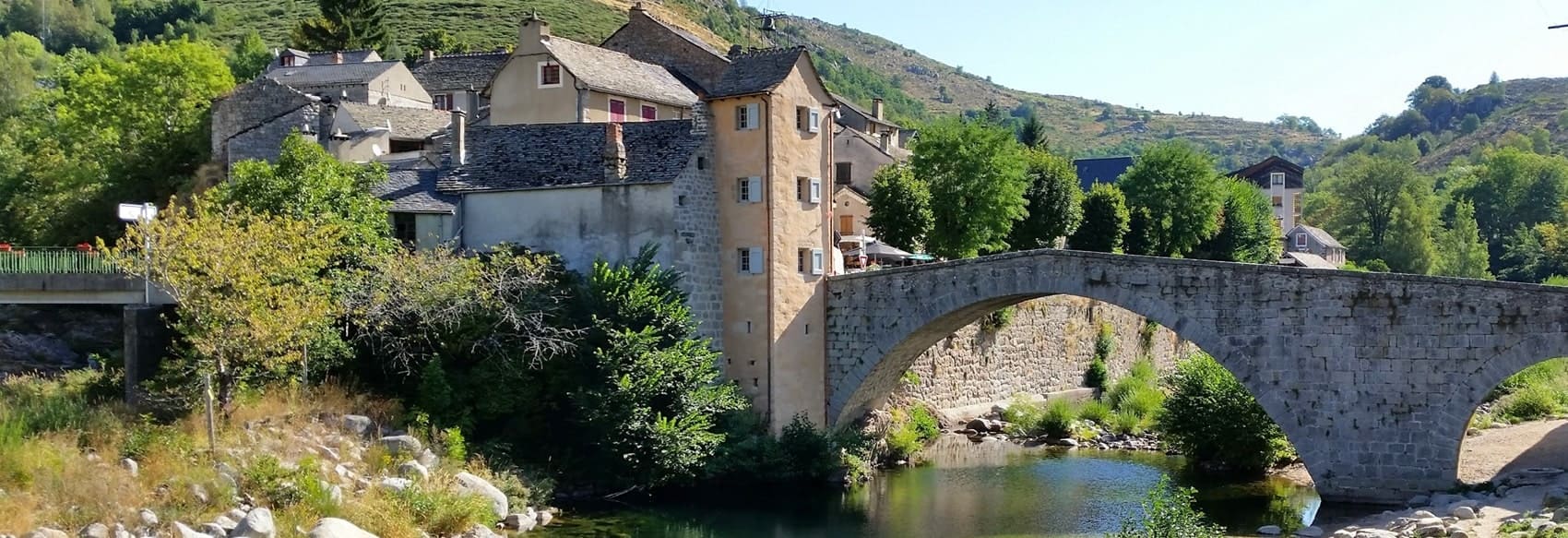
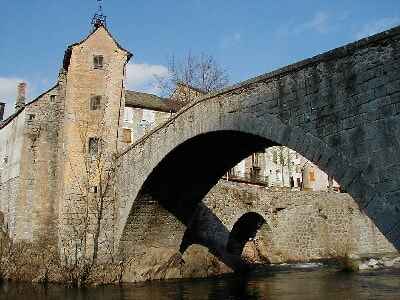 Le Pont-de-Montvert is a commune located in the Lozère department, in the Occitanie region. The town is situated in the Cévennes National Park, near Mont Lozère, and is crossed by the Tarn River. The Tarn originates on Mont Lozère, at an altitude of 1,560 meters. It flows through the Lozère department for about 100 kilometers before emptying into the Garonne. The Tarn is a wild and beautifully preserved river. The commune of Pont-de-Montvert extends over a large part of the southern slope of Mont Lozère and encompasses about fifteen hamlets. The village, surrounded by lush slopes, is nestled at the confluence of the Tarn, Rieumalet, and Martinet valleys.
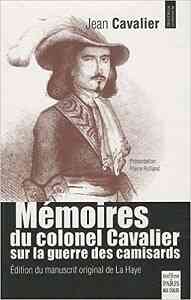 Le Pont-de-Montvert is known for its tumultuous history during the Wars of Religion in France. In 1702, the Camisard leader Jean Cavalier achieved a victory here against the royal troops. A memorial has been erected in the village square to honor this battle. As the son of a Protestant farmer, Jean Cavalier grew up in a context of religious persecution. He was forced to flee his village at the age of 17 to escape the dragonnades, royal troops sent to forcibly convert Protestants.
In 1702, he joined the Camisards, a group of rebellious Protestants fighting against King Louis XIV. He quickly distinguished himself through his military leadership skills and bravery, winning several important victories against the royal troops. Jean Cavalier was also known for his prophetic visions. He believed that God had chosen him to lead the Protestants to victory. His visions helped inspire his followers and kept them united in the struggle.
In 1704, Jean Cavalier signed the Peace of Alès, which ended the Camisard revolt. He obtained honorable conditions for his supporters, including freedom of worship and the right to leave France. After the Peace of Alès, Jean Cavalier chose to go into exile. He lived in Switzerland, the Netherlands, and England. He died in Chelsea in 1740. Jean Cavalier remains an important figure in French Protestant history. He is regarded as a hero by Protestants around the world. His courage, determination, and faith have inspired generations.
Le Pont-de-Montvert is also a starting point for hikes in the Cévennes National Park. The region offers beautiful landscapes, with mountains, rivers, and forests, as well as a rich and varied fauna and flora. Outdoor activities such as hiking are highly popular. The GR®70 Stevenson Trail runs through the village, as do the GR®72 and GR®736.
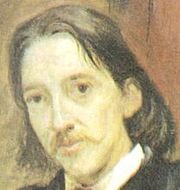 Robert Louis Stevenson arrived at Pont-de-Montvert on September 22, 1878. He stayed in the village inn, which still exists today. Le Pont-de-Montvert inspired Stevenson greatly. He was fascinated by the history of the village, which had been a center of Protestant resistance in the 17th century. He was also impressed by the beauty of the surrounding landscapes. Stevenson wrote several passages in his book about Pont-de-Montvert, describing the village as "a wild and romantic place." He also wrote about the villagers, whom he found "kind and hospitable."
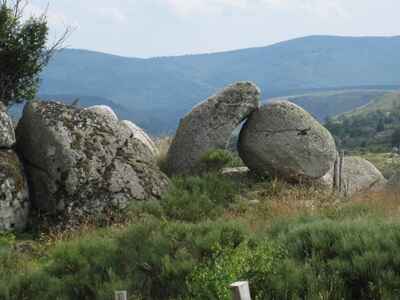 The Cévennes and Mont Lozère. A beautiful yet rebellious nature, stretching between Mont Aigoual and Mont Lozère in the southeast of the department, the land of the Cévennes presents a strong contrast between the rigors of mountain life and the softness of the Mediterranean climate. It is a land of schist and steep valleys, of sheer rocks and slopes at the bottom of which wander numerous streams and torrents. It is also the land of maquis and beech forests, fir trees, oak forests, and especially of the chestnut grove.
Its ruggedness hides a secret and beautiful nature where countless hamlets with squat houses have breathed life into these impenetrable mountains. On the challenging slopes, the terracing system allowed the cultivation of the "golden tree" (the famous mulberry tree), which, along with the adventure of silk, brought wealth to the region. It also allowed for the cultivation of the "bread tree," or chestnut tree, a symbol of the Cévennes and a staple food for generations of Cévenols.
Established in 1970, the Cévennes National Park works on the conservation of animal and plant species, but also on a harmonious development between humans and their environment, being the only inhabited national park in France. From Florac to Saint-Germain-de-Calberte, a land of winding roads, the Cévennes abound with picturesque routes offering breathtaking views and admirable sites. It is a dream destination for beautiful and cultural getaways. To the west, the majestic granite barrier of Mont Lozère contrasts with its "bald" peaks and the gentleness of its reliefs. Nicknamed the "mountain of springs," it rises to 1,700 meters in altitude. The pedestrian paths laid out there offer magnificent walks. In winter, snow covers Mont Lozère, which can be explored on cross-country skis starting from Le Bleymard or Mas de la Barque, before warming up at the wellness center of the Bagnols-les-Bains thermal resort.
 His name was Julien, and he had always dreamed of walking the Stevenson Trail, this famous route of 272 kilometers that follows the traces of the Scottish writer Robert Louis Stevenson through the Cévennes. He had prepared his backpack, his hiking stick, and his guidebook, and had set off from Le Monastier-sur-Gazeille, in Haute-Loire, one autumn morning. He had crossed varied landscapes, from volcanic plateaus to lush valleys, passing through picturesque villages and medieval castles. He had met welcoming people who had offered him lodging and food, and who had told him stories about their land. He had also encountered other hikers with whom he shared moments of conviviality and mutual aid. But what he looked forward to the most was crossing Mont Lozère, the highest point of the trail, at 1,699 meters above sea level. He knew that it was there that Stevenson had faced the greatest difficulties, but also the most beautiful emotions. He wanted to feel the same and feel close to the author he admired so much.
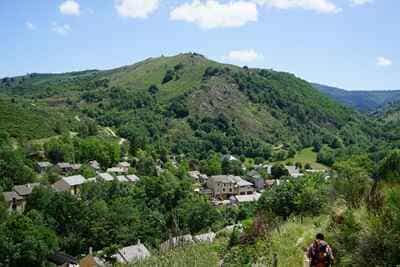 He arrived at the foot of Mont Lozère one evening, after walking all day. He found a refuge where he could rest and warm up. He went to bed early because he wanted to get up at dawn to begin the ascent. He fell asleep thinking about the spectacle that awaited him at the summit.
The next day, he woke up before the sun and set out. He followed the red and white markings of the GR®70, which meandered through the heath and forests. He felt his breath getting shorter and his legs growing heavier as he gained altitude. But he did not get discouraged; he told himself that it was the price to pay to reach his goal.
He finally reached the summit after two hours of walking. He was dazzled by the view that lay before him. He saw the sun rising on the horizon, illuminating the surrounding peaks. He saw the clouds unraveling beneath his feet, revealing distant valleys. He saw the sky tinted with pink, violet, and gold. He felt overwhelmed by immense joy and unparalleled pride. He had succeeded in his challenge; he had conquered Mont Lozère. He paused for a moment to contemplate the landscape and savor his victory. Then he picked up his backpack and began the descent toward Pont-de-Montvert, his stop for the day. He knew he still had some way to go, but he felt lighter, more confident, and happier. He thought he had just lived one of the most beautiful adventures of his life, and he would never forget that moment. He felt he had walked a bit in Stevenson's footsteps and had written a bit of his own story.